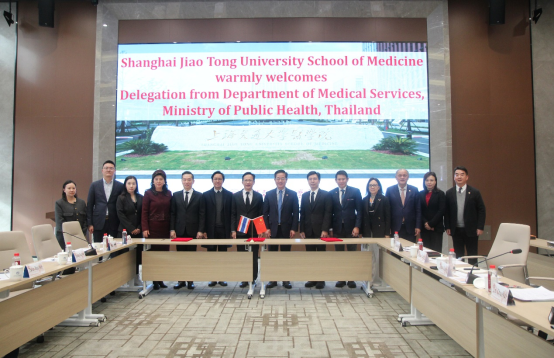
On January 12, a delegation led by Nutthapong Wongwiwat, Director-General of the Department of Medical Services, Ministry of Public Health of Thailand, visited Shanghai Jiao Tong University School of Medicine. Fan Xianqun, Chancellor of SJTUSM and Academician of the Chinese Academy of Engineering, met with the delegation at the Pudong Campus. The Office of Academic Affairs, Hospital Administration Office, Office of Science and Technology Development, and Office of International Affairs also attended the meeting.
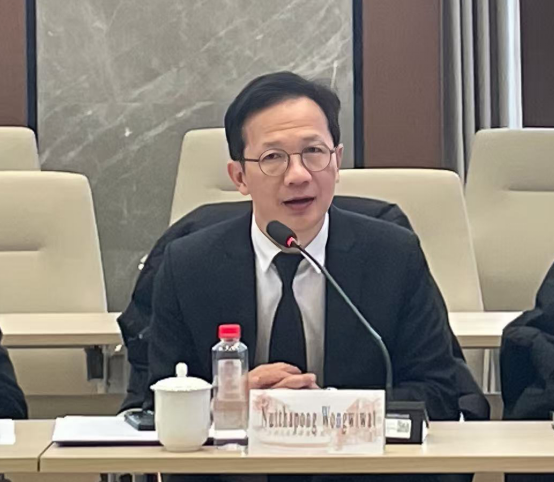
Nutthapong Wongwiwat
Chancellor Fan extended a warm welcome to the Thai delegation and provided an overview of the School of Medicine’s history and its notable achievements in talent cultivation, scientific research, medical innovation, and international cooperation. He noted that SJTUSM has long maintained close interaction and academic exchange with medical schools in Thailand. In December 2025, as the Chair institution of the South and Southeast Asia Medical Education and Healthcare Alliance, SJTUSM hosted the 2025 Alliance Conference in Bangkok, Thailand. Experts from more than 20 medical schools across South and Southeast Asia—including Chulalongkorn University, Mahidol University, and Prince of Songkla University—engaged in in-depth discussions on future collaboration, laying a solid foundation for further expanding China–Thailand cooperation in medical education and scientific and technological innovation.
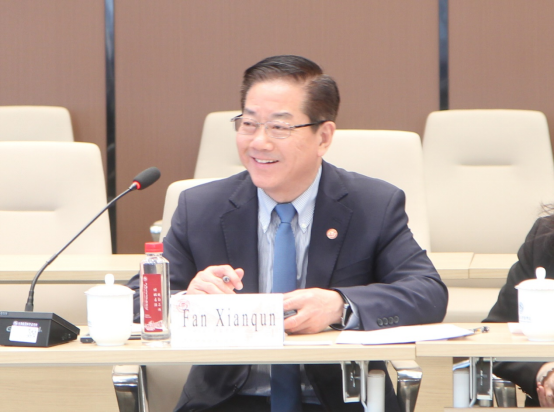
Director-General Nutthapong Wongwiwat expressed sincere appreciation for the warm reception by SJTUSM and spoke highly of the School’s leading position in research innovation, talent training, and international collaboration. He noted that the delegation’s visit to Ruijin Hospital, an SJTUSM affiliated hospital, left a strong impression on all members, fully demonstrating Shanghai’s advanced experience in medical technology, hospital management, and public health system development.
During the exchange, Sakarn Bunnag, Deputy Director-General of the Department of Medical Services, introduced Thailand’s healthcare system. He explained that the Ministry of Public Health comprises multiple functional departments, with the Department of Medical Services responsible for the planning and management of public specialty hospitals nationwide. The department oversees 32 national and regional specialty hospitals covering key fields such as infectious diseases, cardiovascular diseases, oncology, and rehabilitation medicine. In addition, the Ministry regulates more than 1,000 private hospitals and clinics, forming a healthcare system in which public hospitals serve as the backbone, complemented by private institutions, jointly advancing universal health services.
Director-General Nutthapong Wongwiwat expressed his hope that this visit would serve as an opportunity to further deepen exchanges and cooperation between Thailand’s healthcare system and Shanghai’s medical education institutions in areas including scientific research, medical education, health policy, and talent development, thereby achieving shared development and mutual benefit. This initiative received positive responses and unanimous support from representatives of both sides.
Following the meeting, Chancellor Fan Xianqun, on behalf of Shanghai Jiao Tong University School of Medicine, jointly signed a tripartite Memorandum of Understanding with Somchai Thanasitthichai, Director of the National Cancer Institute of Thailand, and Monchai Siribamrungwong, Director of the Institute of Advanced Medical Education. The signing of the MoU will further promote practical cooperation between SJTUSM and Thai partners in knowledge sharing, scientific research collaboration, and medical education. It also opens new avenues for the School’s active participation in the Belt and Road Initiative and the Health Silk Road, injecting new momentum into the deepening of China–Thailand medical cooperation.
About the Institutions
Department of Medical Services, Ministry of Public Health, Thailand
Responsible for the management of national specialty hospitals and medical centers and for the supervision of medical quality. The Department undertakes key responsibilities in the prevention and control of major diseases, medical research, and the development of public health technologies.
National Cancer Institute, Thailand
The national authority in cancer prevention, research, and treatment in Thailand, dedicated to strengthening the country’s cancer control system and advancing international collaboration.
Institute of Advanced Medical Education, Thailand
Affiliated with the Ministry of Public Health of Thailand, the Institute focuses on the development of high-level medical education systems and innovation in medical research, providing support for the training of specialized medical professionals in Thai medical schools.