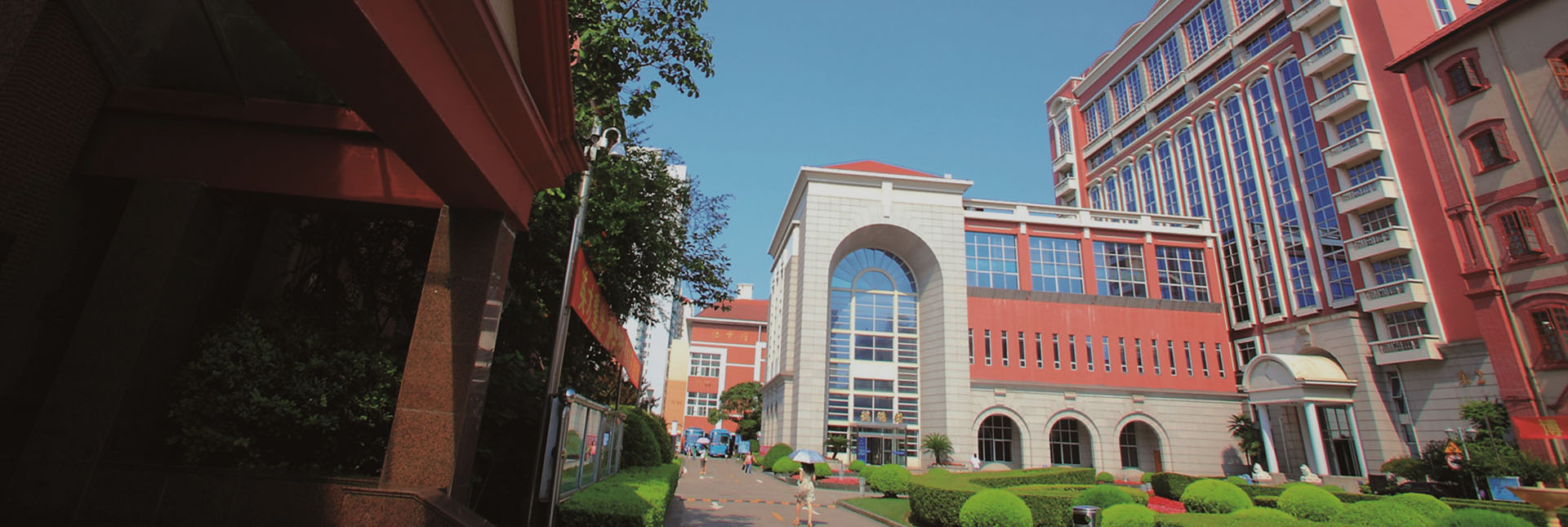
Shanghai Jiao Tong University School of Medicine (SJTUSM) is located in the heart of Huangpu district, Shanghai, China, where the innovative spirit, diverse culture and inclusiveness are long-planted. SJTUSM is formerly known as Shanghai Second Medical University, which was established in 1952 during the nationwide reorganization of higher education. It was formed through the merger of St. John’s University School of Medicine (1896-1952), Aurora University School of Medicine (1912-1952), and Tongde Medical College (1918-1952) in 1952. In 1985, it was officially renamed Shanghai Second Medical University. In 1997, the university was selected as part of China’s “Project 211” initiative. In July 2005, Shanghai Jiao Tong University and Shanghai Second Medical University merged to establish the SJTUSM, which is jointly supported by the Ministry of Education and the Shanghai Municipal Government, and was included in the national “Project 985” initiative. In November 2010, SJTUSM became one of the first batch of ten key universities jointly supported by the Ministry of Health and the Ministry of Education.
With more than a century of academic heritage and over seventy years of dedicated development, SJTUSM has upheld its mission of repaying the motherland and serving the people. Guided by the spirit of “exploring medical science to the limits through diligence and dedication” and inspired by the institutional spirit of openness, truth-seeking, integrity, innovation, and dedicated service, the School has consistently committed itself to strengthening the nation, pursuing scientific truth, and honoring the sacred calling of medicine. Advancing in step with the times, sharing the nation’s destiny, and standing alongside the people, it has left a profound mark on the landscape of China’s healthcare system and has trained more than 70,000 medical professionals for society. At present, SJTUSM has developed into an innovative research-oriented school boasting a high international reputation, distinguished faculty, outstanding features, and remarkable academic achievements. SJTUSM also achieves all-round development in medical education, clinical services, scientific research and social services. With its overall strength firmly ranked among the top nationwide, it consistently holds the leading position among medical institutions in China across multiple comprehensive disciplinary rankings.
SJTUSM currently operates four campuses located in Pudong, Huangpu, Chongming, and Hainan. With a history spanning more than a century, SJTUSM has opened a new chapter of expansion, extending from Puxi to Pudong and from Xintiandi into the International Medical Zone.
SJTUSM firmly implements its core strategy of developing a leading medical school through talent, prioritizing the cultivation of a strong faculty and a large number of outstanding experts. SJTUSM currently has 44,233 staff members, 1,020 full-time faculty members, 6,439 personnel holding senior professional titles, 1,211 doctoral supervisors, and 1,362 master’s supervisors. It is home to 19 academicians of the Chinese Academy of Sciences and the Chinese Academy of Engineering, as well as 287 nationally recognized high-level talents. In addition, SJTUSM has 1 national-level teaching team; 19 recipients of the National Teaching Master Award and the National Outstanding Teacher Award; 1 Ministry of Education curriculum-based ideological and political education teaching team; 8 Ministry of Education curriculum-based ideological and political education teaching masters; and 2 Ministry of Education “Overseas Distinguished Teachers.” In recognition of his outstanding contributions, Academician Wang Zhenyi received the 2010 State Preeminent Science and Technology Award in 2011 and was further honored with the National Medal of the People’s Republic of China in 2024.
SJTUSM comprises 25 colleges (departments) and 14 affiliated hospitals. It offers doctoral programs in seven first-level disciplines, including Biology, Basic Medicine, Clinical Medicine, and Stomatology, and operates six postdoctoral research stations. It provides an eight-year clinical medicine program leading to a doctoral degree, along with ten undergraduate programs: Clinical Medicine, Stomatology, Pediatrics, Preventive Medicine, Biomedical Sciences, Medical Laboratory Technology, Food Safety and Nutrition, Medical Imaging Technology, Audiology and Speech-Language Rehabilitation, and Nursing. Among these, Clinical Medicine, Stomatology, Biomedical Sciences, Preventive Medicine, Nursing, Pediatrics, and Medical Laboratory Technology are recognized as national-level first-class undergraduate programs. The School also offers several distinctive tracks, including the eight-year Clinical Medicine program (French Track), the eight-year Clinical Medicine program (4+4 MD–PhD Track), the integrated “5+3” Pediatrics program, and the five-year Clinical Medicine program (English Track).
SJTUSM upholds the fundamental mission of fostering moral integrity and cultivating talent, emphasizing well-rounded education across multiple dimensions. The School is committed to training outstanding medical innovators and strategic medical scientists. Strengthening its “new medicine” strategy, it has launched an interdisciplinary “MD+PhD” dual-degree program, implementing innovative models of integrated training such as “X+Medicine” and “Medicine+X.” Through the joint efforts of faculty, students, and healthcare professionals, the Clinical Medicine discipline has received the longest accreditation cycle granted by the Ministry of Education and, as the only Chinese medical school, has been reviewed by the World Federation for Medical Education (WFME). This recognition also enabled the unconditional approval of China’s clinical medicine accreditation agency by the WFME.
SJTUSM currently enrolls 11,765 students, including 4,006 undergraduates, 3,669 master’s students, 3,964 doctoral students, and 126 international students, with an overall employment rate of 97%.
As the chairing unit of the Ministry of Education’s Teaching Steering Committee for Basic Medicine and the deputy chairing unit for the Teaching Steering Committee for Stomatology, SJTUSM also serves as the discipline leader of the National Clinical Skills Experimental Demonstration Center and hosts a National Virtual Simulation Experimental Teaching Center. It benefits from comprehensive clinical simulation facilities, a strong faculty team, abundant medical resources, and advanced operational platforms. Through organ-system-integrated courses, hands-on clinical skills training, and objective structured clinical examinations (OSCEs), the School systematically enhances medical students’ clinical competence and innovative capacity. Currently, it manages three national off-campus practice education bases, two national experimental teaching demonstration centers (including a virtual experimental teaching center), two national clinical teaching training demonstration centers, and three national virtual simulation teaching projects.
Over the years, SJTUSM has received 14 National Teaching Achievement Awards and established seven national first-class undergraduate program construction points. It offers 10 national-level high-quality courses, five national-level shared-resource courses, two national-level high-quality online open courses, eight national-level exemplary open courses, one national-level curriculum-based ideological and political education exemplary course, and 16 national first-class undergraduate courses. SJTUSM also hosts four national-level virtual teaching and research offices, one Ministry of Education curriculum-based ideological and political education teaching team, and eight Ministry of Education-recognized curriculum-based ideological and political education distinguished teachers.
SJTUSM holds a total collection of nearly 460,000 books, provides access to more than 500,000 e-books, and subscribes to over 90 databases in its library. It is open 97 hours per week. Emphasizing the development and optimization of its collections, the library offers comprehensive coverage across the biomedical sciences, including clinical medicine, basic medical sciences, pharmacy, and evidence-based medicine. To support teaching and learning, it has introduced a wide range of specialized databases, ensuring strong literature and information resources for the School’s education and research activities.
SJTUSM has been a pioneer in exploring and implementing reforms of the “5+3” and “5+3+X” training models for Clinical Medicine. It plays an active role in Shanghai’s standardized residency training programs and has advanced the effective integration of residency training with the professional master’s degree program in Clinical Medicine. SJTUSM has also taken the lead in piloting innovative training pathways for professional doctoral students in Clinical Medicine, aligning doctoral education with standardized specialist training programs.
Guided by its fundamental mission of fostering moral integrity and cultivating talent, SJTUSM fully implements the guiding principles articulated at national and Shanghai municipal conferences on ideological and political work in higher education, as well as those of the National Education Conference. SJTUSM regularly invites national model workers, newly elected academicians, and leading medical experts to engage directly with faculty and students. It was also the first to launch a “Healthy China”–themed ideological and political education course, establishing the distinctive “China Series” curriculum brand. Through five hallmark ceremonial education initiatives—professional oath-taking, white coat ceremonies, memorial observances, cap conferrals, and gratitude ceremonies—SJTUSM enriches the educational experience and strengthens the cultivation of socialist core values among medical students. In addition, it has innovatively introduced a “dual-mentor collaboration and coordinated education” mechanism, integrating class advisors with first-year mentors and implementing a continuous, full-coverage advising system for undergraduates. Collectively, these initiatives have formed a comprehensive framework for medical ideological and political education characterized by full participation, whole-process engagement, and all-round support.
Closely aligned with China’s world-class university developing strategy, SJTUSM takes the overall enhancement of discipline development and the quality of talent cultivation as its core, with the training of outstanding medical innovators as its ultimate objective, and is committed to advancing the development of a world-class medical school and world-class medical disciplines. Through comprehensive planning with clearly defined priorities, SJTUSM is steadily advancing the construction of major national translational medicine research infrastructure projects. Leveraging the development of leading disciplines, as well as the advancement of high-level local universities, it is driving a new round of optimization in disciplinary layout and strategic development.
According to the latest Essential Science Indicators (ESI) rankings, five disciplines-Clinical Medicine, Pharmacology & Toxicology, Biology & Biochemistry, Molecular Biology & Genetics, and Immunology-have entered the top 0.1% worldwide by citation impact. Among them, Clinical Medicine ranks 75th globally, placing first nationwide, while its publication output ranks 20th worldwide, positioning it within the top 0.01% globally. In addition, three other disciplines have entered the top 1% worldwide. In the latest U.S. News & World Report Best Global Universities Rankings, Clinical Medicine is ranked 55th globally. Five disciplines-Surgery, Gastroenterology & Hepatology, Endocrinology & Metabolism, Cardiac & Cardiovascular Systems, and Immunology-rank first nationally, while 12 disciplines are ranked within the top three nationwide, and 17 disciplines are listed among the global top 100. In the ARWU Best Chinese Subjects Rankings, Clinical Medicine ranks first nationwide, Stomatology and Basic Medicine both rank second, Pharmacy ranks ninth, Public Health & Preventive Medicine ranks tenth, and Nursing ranks twelfth. In the latest QS World University Rankings by Subject, Medicine is ranked 71st globally, Dentistry 55th, Anatomy & Physiology 23rd, Pharmacy & Pharmacology 45th, Biological Sciences 57th, and Nursing 89th.
Aligned with Shanghai’s strategic goal of developing the “Four Centers” and building a globally influential science and technology innovation hub, and in step with national reforms of the science and technology system, SJTUSM continues to strengthen its capacity for scientific innovation and the translation of research achievements into practice. It has sustained efforts to advance the planning and implementation of major initiatives in fields such as brain science and oncology, while cultivating a strong pipeline of outstanding medical talent to further enhance innovation capacity and accelerate the translation of scientific achievements. SJTUSM has established the “Double Hundred” Talent Program to nurture clinician-scientists and dedicated clinical research teams, alongside a postdoctoral incentive program and the “High-Level Innovation Team” initiative. These efforts promote synergistic innovation across clinical-to-clinical, basic-to-clinical, and medicine-to-engineering disciplines. SJTUSM has also formed a Clinical Research Center and continues to conduct multi-center clinical studies, significantly strengthening its clinical research capabilities. From 2005 to the present, SJTUSM has received a total of 41 National Science and Technology Awards, including 1 State Preeminent Science and Technology Award, 2 Second Prizes of the National Natural Science Award, 1 Second Prize of the National Award for Technological Invention, 35 National Science and Technology Progress Awards, and 2 International Science and Technology Cooperation Awards of the People’s Republic of China. In 2024 alone, SJTUSM secured 837 grants from the National Natural Science Foundation of China, ranking first among medical schools nationwide for the sixteenth consecutive year. During the same year, it published 4,530 SCIE-indexed papers and obtained authorization for 1,106 patents across the School system.
SJTUSM has achieved remarkable success in the construction of research bases and platforms. It hosts one national major science and technology infrastructure (the National Major Science and Technology Infrastructure for Translational Medicine, Shanghai), two national key laboratories under its leadership, and two jointly established national key laboratories. In addition, it includes one national engineering research center, one national international science and technology cooperation base, three Ministry of Education key laboratories, two Ministry of Education engineering research centers, four key laboratories under the National Health Commission, 36 Shanghai municipal key laboratories, 13 Shanghai engineering technology research centers, two Shanghai municipal engineering research centers, 10 Shanghai municipal clinical medicine research centers, and 17 Shanghai municipal professional technical service platforms.
SJTUSM continues to advance the development of high-level research platforms, including the Institute of Precision Medicine, Institute of Molecular Medicine, Institute of Immunotherapy Innovation, Institute of Digital Medicine, Songjiang Research Institute, Institute of Virology, Yuanshen Institute of Rehabilitation, SANS Institute for Neuroscience and Vision Research, and the Institute of Medical Artificial Intelligence. These efforts have fostered a robust environment for attracting top talent and generating significant research achievements.
SJTUSM set sail from Shanghai, rooted in China, and is now reaching out to the world. Adhering to the principles of putting people and life first, and aligning with the “Healthy China” strategy, it currently has 14 affiliated hospitals, including 9 general hospitals and 5 specialized hospitals. It is continuously developing 5 national medical centers, 3 national clinical research centers, and 10 national regional medical centers. By comprehensively enhancing China’s healthcare standards and clinical service capabilities, SJTUSM has produced a range of clinical achievements that benefit human health, cured numerous complex and challenging medical conditions, and provided strong support for healthcare in Shanghai and across the nation.
SJTUSM has been continuously deepening international cooperation and emphasizing global exchange, steadily improving the internationalization of medical education. It has established extensive collaborations with 70 universities and research institutions across 21 countries and regions. To strengthen research partnerships with top global universities, the school has established the Shanghai Jiao Tong University School of Medicine Center for Single-Cell Omics and jointly founded the “All Health Research Center” with the University of Edinburgh in the UK. SJTUSM has carried out approximately 55 overseas study programs in collaboration with 71 universities and institutions across 21 countries, with 50.4% of undergraduates participating in short-term international visits. In recent years, in partnership with world-class universities, the school has expanded and implemented multiple online study programs, allowing students to access high-quality international education without leaving China, thereby enhancing their global perspective. Education for international students has also progressed steadily. In 2020, it successfully passed the quality certification for studying in China organized by the China Education Association for International Exchange, becoming the first and only university in the country to receive an eight-year certification term.
SJTUSM has a rich and high-quality tradition in Sino-French medical education, and Sino-French collaborative programs have become one of its distinctive features. The school’s cooperation with French medical institutions has a long history. Since the establishment of the predecessor of SJTUSM, Aurora University School of Medicine, in 1911, the school has continuously expanded educational collaborations with top French universities, achieving remarkable results and cultivating over 800 French-speaking medical professionals. In 2013, the “Doctoral Program in Medical Education jointly offered by Shanghai Jiao Tong University and the University of Strasbourg” was officially approved by the Ministry of Education, becoming the first Sino-foreign joint doctoral program in medicine in China. In 2018, the “Sino-French Joint Medical School” was officially established in collaboration with Paris Descartes University, Claude Bernard University Lyon 1, Catholic University of Lille, University of Strasbourg, and Grenoble Alpes University, fully launching deep cooperation across medical practice, education, and research. This milestone marked a new chapter and a higher level in the school’s Sino-French medical cooperation. In 2021, a French-language program in Medical Laboratory Technology was established. Following a “4 years in China + 1 year in France” model combining theoretical study and laboratory practice, the program cultivates innovative and versatile professionals with solid medical foundations, broad knowledge, strong laboratory skills, and research capabilities.
Reflecting on the past to guide the future, carrying forward the mission while embracing long-term responsibilities, all members of SJTUSM are committed to turning dreams into action. With steadfast medical convictions and a pursuit of scientific truth, they will unite strength, seize opportunities, stand at the forefront, and strive courageously to build a world-class medical school, advance medical education reform, and contribute continuously to the development of healthcare in China.
(Data as of Septermber 30, 2025.)