On 17 June 2026, a delegation led by Professor Keith Brennan, Vice-Dean of the Faculty of Biology, Medicine and Health at The University of Manchester, visited Shanghai Jiao Tong University School of Medicine (SJTUSM). The two sides held a dedicated meeting to discuss the establishment of a joint centre for in silico trails and the development of a collaborative medical education programme.
Representatives from the Shanghai Municipal Science and Technology Commission, Vice Chancellor Zheng Junke of SJTUSM, the Office of International Affairs, the Office of Science and Technology Development, and Shanghai Children’s Medical Center attended the meeting.
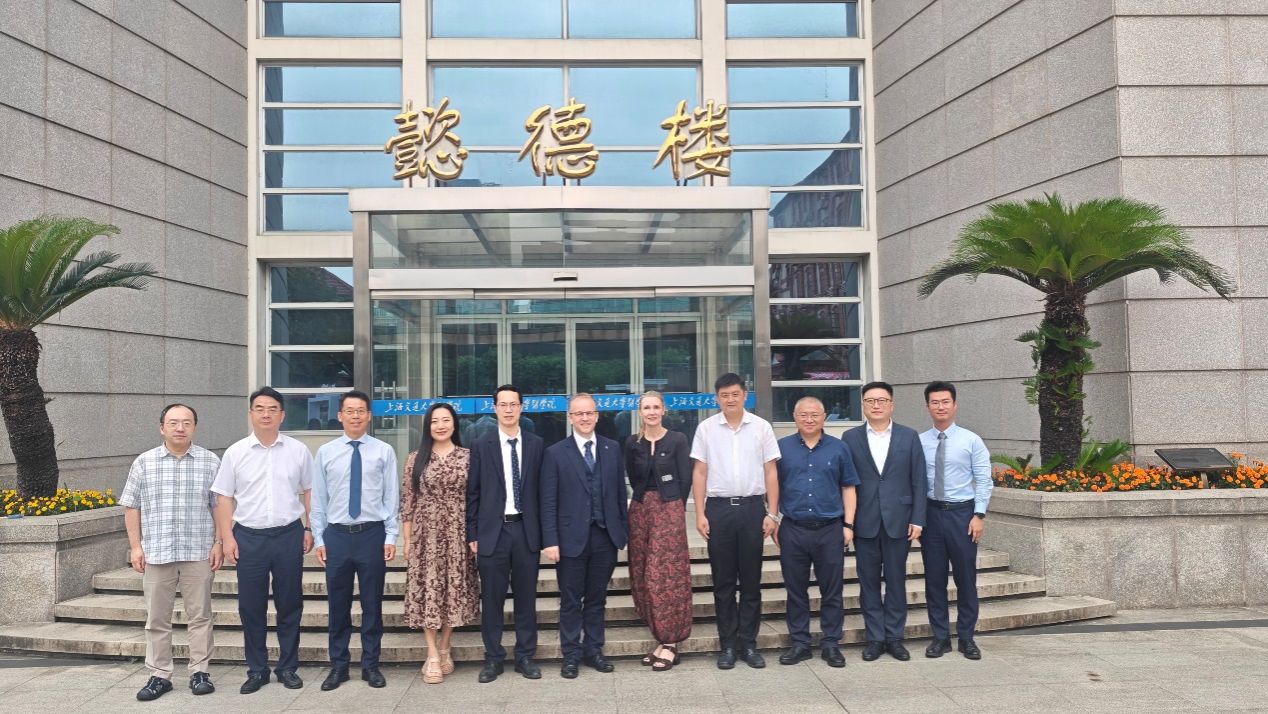
During the discussions, Professor Alejandro F. Frangi, Fellow of the Royal Academy of Engineering (UK), Turing Bicentenary Chair in Computational Medicine at The University of Manchester, and RAEng Chair in Computational Medicine, presented the University’s developments in in silico clinical trials, regulatory science innovation, and plans for the establishment of a dedicated research centre. He highlighted how digital simulation technologies are transforming clinical trials and the regulatory evaluation of medicines and medical devices, and expressed his enthusiasm for partnering with SJTUSM to create a regional hub for regulatory science innovation serving the Asia-Pacific region.
Vice Chancellor Zheng Junke and representatives from relevant departments introduced SJTUSM’s strengths in clinical research, medical artificial intelligence, and digital health, while reviewing the achievements of existing collaborations between the two institutions. Both sides agreed that establishing a joint center would facilitate the integration of UK and Chinese expertise in regulatory science, data modelling, and clinical evaluation, thereby accelerating the scientific and intelligent assessment of innovative healthcare products.
The meeting also featured in-depth discussions on the latest progress of the proposed 3+3 dual award clinical medicine program. Under this initiative, students would complete their first three years of foundational medical sciences and humanities education at SJTUSM before undertaking three years of clinical education and clinical placements at the University of Manchester. Upon successful completion, students would receive bachelor’s degrees in clinical medicine awarded by both institutions. The programme is expected to serve as a landmark model for the internationalisation of clinical medical education in China. Both parties reaffirmed their commitment to advancing programme approval and curriculum alignment with the aim of enrolling the first cohort of students as soon as possible.
The visit represents another significant step forward in the partnership between the two universities following the visit of Professor Duncan Ivison, President and Vice-Chancellor of The University of Manchester, to Shanghai Jiao Tong University in March 2026. Both sides agreed to continue discussions on the governance framework and operational mechanisms for the proposed centre in the near future.
About The University of Manchester and the Faculty of Biology, Medicine and Health
The University of Manchester is one of the United Kingdom’s leading research-intensive universities, a founding member of the Russell Group, and widely recognised as the foremost of the historic “red brick” universities. The Faculty of Biology, Medicine and Health (FBMH) is among the largest and most comprehensive academic communities in medicine and health sciences in Europe, bringing together expertise across biomedical sciences, clinical medicine, public health, and healthcare management.
The Faculty is internationally recognised for its research excellence in areas including in silico medicine, regulatory science innovation, and evidence-based healthcare. Through its close integration with the UK National Health Service (NHS), its research directly informs clinical practice and public health policy.
Collaboration Between Shanghai Jiao Tong University School of Medicine and The University of Manchester
Collaboration between the two institutions in medicine began in 2016. Over the past decade, the partnership has evolved from academic exchanges and forums into a comprehensive strategic collaboration encompassing joint doctoral training, scholar visits, co-developed medical curricula, and collaborative research platforms.
The two institutions jointly organise annual academic symposia focusing on key areas such as neuroscience, immunology, oncology, and metabolic diseases. Through the China Scholarship Council Innovative Talent Platform Programme, multiple cohorts of SJTUSM students have been selected to pursue PhD studies or joint doctoral training at Manchester, while young clinicians have undertaken academic visits and research exchanges at the University.
In 2024, the two parties signed a letter of Intent on the dual award clinical medicine undergraduate program. The University of Manchester’s senior leadership has visited SJTUSM on multiple occasions and has consistently expressed strong support for the partnership. Medical collaboration is widely regarded as one of the closest and most productive areas of cooperation between the two universities.
In 2026, the partnership entered a new phase of accelerated development. In March, President and Vice-Chancellor Duncan Ivison visited Shanghai Jiao Tong University and received updates on ongoing medical collaborations. During the same period, Professor Alejandro Frangi visited Shanghai Children’s Medical Center and Renji Hospital to explore opportunities for establishing a joint centre for in silico trials. The initiative aims to combine Manchester’s internationally leading expertise in computational medicine and in silico clinical simulation with SJTUSM’s extensive clinical resources, accelerating safer, evidence-based medical innovation for the benefit of Chinese citizens.
After a decade of collaboration, the partnership has progressed from joint talent development to the co-creation of international research and innovation platforms. This latest visit marks the beginning of a new chapter in the joint development of internationally influential research infrastructure and will contribute significantly to China-UK cooperation in medical innovation and regulatory science.