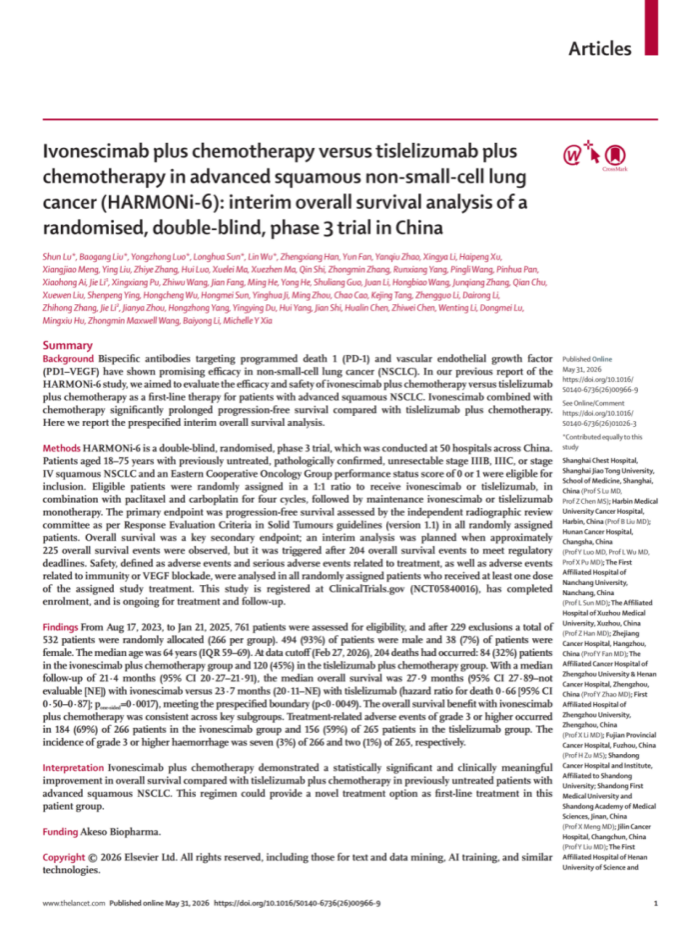
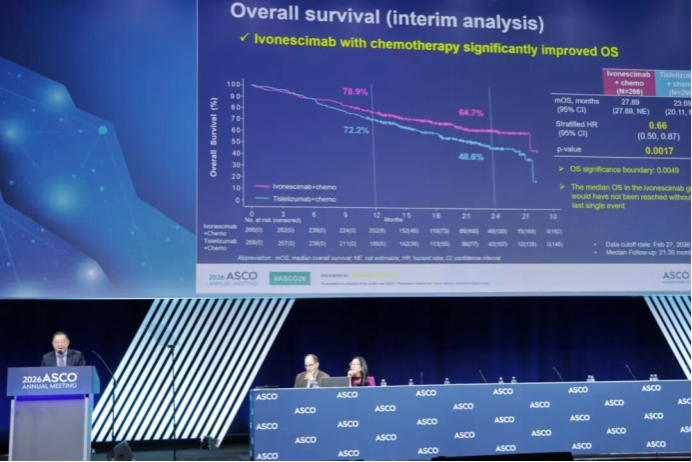
On May 31, Professor Lu Shun, Lifetime Professor at Shanghai Jiao Tong University School of Medicine’s Affiliated Chest Hospital, a leading expert in oncology, and Director of the Shanghai Lung Cancer Clinical Medical Center, led his team in reporting significant progress from the Phase III HARMONi-6 study. The results were published in the prestigious international journalThe Lancet. On the same day, Professor Lu presented the study’s overall survival (OS) findings at the Plenary Session of the 62nd Annual Meeting of the American Society of Clinical Oncology (ASCO).
Results from the HARMONi-6 study demonstrated that first-line treatment with AK112 plus chemotherapy significantly extended overall survival in patients with advanced squamous non-small cell lung cancer (NSCLC), compared with tislelizumab plus chemotherapy. Professor Lu was both the first author and the corresponding author of the study.
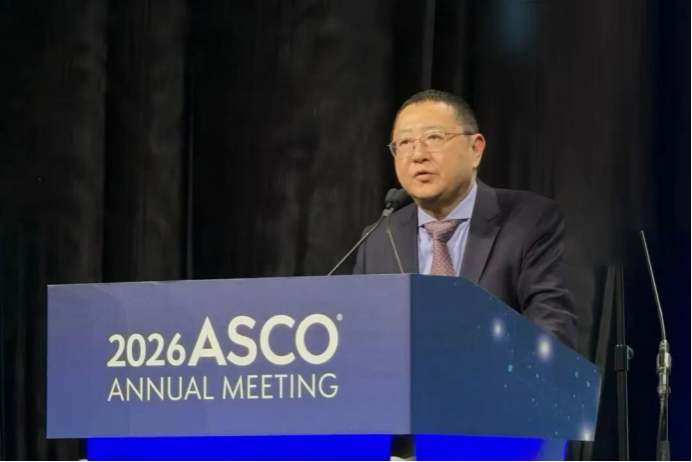
The ASCO Annual Meeting isone of the most influential and widely followed platforms in global oncology, featuring research with thehighestpotential to shape future standards of care. As the first China-led study of an innovative lung cancer therapy to be presented in an ASCO Plenary Session in the society’s 61-year history, HARMONi-6 marks a significant milestone for Chinese oncology research. Its selection reflects the growing international recognition of China’s contributions to lung cancer clinical research and underscores Shanghai Chest Hospital’s leadership in both clinical care and translational research.
Advanced squamous non-small cell lung cancer (NSCLC) remains one of the most challenging subtypes of lung cancer to treat. While immunotherapy combined with chemotherapy has become a key first-line standard, improving long-term survival continues to be an urgentunmetclinical need.
To address this need, Professor Lu’s team conducted a multicenter, randomized, controlled Phase III trial, “AK112 Plus Chemotherapy versus PD-1 Inhibitor Plus Chemotherapy as First-Line Treatment for Locally Advanced or Metastatic Squamous NSCLC” (HARMONi-6), enrolling 532 patients with previously untreated advanced squamous NSCLC. The study compared the efficacy and safety of AK112 plus chemotherapy with tislelizumab plus chemotherapy.
The results showed a median overall survival of 27.9 months in the AK112 combination group, compared with 23.7 months in the tislelizumab group. Survival benefits were consistent across key subgroups, and the AK112 regimen demonstrated a favorable safety profile while significantly reducing the risk of mortality.
Professor Lu commented, “The HARMONi-6 study addresses critical unmet needs in the first-line treatment of advanced squamous NSCLC and confirms that AK112 combined with chemotherapy offers a survival advantage over current standard therapy. This research not only provides new evidence to guide clinical practice but also highlights the increasing global influence of Chinese clinical research in oncology.”