On May 27, the Shaw Prize Foundation unveiled the 2026 Shaw Prize laureates, recognizing seven leading scientists for their outstanding achievements in Astronomy, Life Science and Medicine, and Mathematical Sciences.
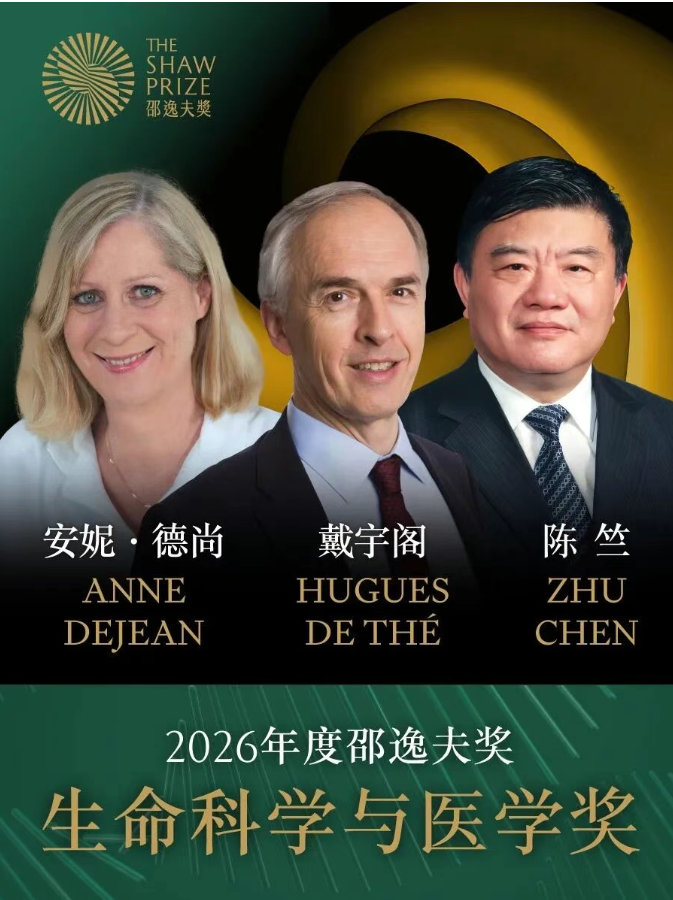
The Shaw Prize in Life Science and Medicine was jointly awarded to Academician Chen Zhu, Lifetime Professor at Ruijin Hospital, Shanghai Jiao Tong University School of Medicine, Professor Anne Dejean of the Institut Pasteur, and Professor Hugues de Thé of the Collège de France, holder of the chair of cellular and molecular oncology. The three were honored for their pioneering research uncovering the molecular and cellular mechanisms of acute promyelocytic leukemia (APL), which led to the development of a highly effective targeted therapy that transformed APL from one of the deadliest leukemias into one of the most curable cancers worldwide.
Notably, Chen Zhu is the first Chinese scientist intwodecades to receive the Shaw Prize, marking a historic milestone for China’s biomedical research community.
Turning a Fatal Leukemia into a Curable Disease
APL is an aggressive subtype of acute myeloid leukemia caused by a chromosomal translocation that fuses two genes: PML (promyelocytic leukemia), a tumor suppressor, and RARα (retinoic acid receptor alpha). The resulting PML–RARα fusion protein blocks normal blood cell maturation, leading to a life�threateningaccumulation of immature leukemic cells.
The discoveries recognized by this year’s Shaw Prize were made through the collaborative and independent contributions of the three laureates.
Professor Anne Dejean was among the first to elucidate the molecular defect underlying APL. Together with her doctoral student, Hugues de Thé, she demonstrated that chromosomal rearrangement disrupts RARα and generates the PML–RARα fusion protein. Dejean further showed that this abnormal protein interferes with PML nuclear bodies, essential structures in the cell nucleus required for normal blood-cell differentiation.
Dejean also demonstrated that treatment with all-trans retinoic acid (ATRA), a vitamin A derivative previously known to induce remission in APL, restores PML nuclear body integrity, thereby directly linkingthe therapeutic effect to its molecular mechanism.
Hugues de Thé independently expanded this work by detailing the composition and functions of PML nuclear bodies and showing how their disruption by the PML–RARα protein alters gene expression and blocks cell differentiation, driving the accumulation of immature leukemic cells..
Chen Zhu: From Molecular Insight to Clinical Breakthrough
Academician Chen Zhu made transformative contributions to these molecular discoveries into a curative therapy. Heidentified PML as the direct molecular target of arsenic trioxide, establishing the mechanisticfoundationfor its clinical use in APL.
Drawing on two therapies with roots in China, Chen Zhu combined ATRA and arsenic trioxide into a synergistic treatment. ATRA targets the RARα portion of the fusion protein, while arsenic targets PML. Together, they degrade the disease-causing protein and restore normal blood-cell development.
This non-chemotherapy regimen achieves remission and long-term survival rates exceeding 90 percent, establishing a nonchemotherapy standard of care for APL. Chen’s work has transformed APL from one of the most fatal leukemias to one of the most curable, exemplifying how precise molecular understanding can produce highly effective, low-toxicity cancer therapies.
The laureates’ research uncovered the molecular mechanism underlying the remarkable success of APL therapy, showing that arsenic targets the PML domain of the PML–RARα fusion protein, while ATRA binds to the RARα domain. Used together, these agents act synergistically to degrade the disease-driving fusion protein and restore normal blood-cell development.
Collectively, the groundbreaking contributions of Anne Dejean, Hugues de Thé, and Chen Zhu transformed scientific understanding of acute promyelocytic leukemia (APL) and revolutionized its treatment, providing a landmark example of translational medicine. Their work demonstrates how insights into the molecular basis of disease can lead to highly precise and effective therapies that directly target the root cause of cancer and offer a powerful alternative to conventional chemotherapy, which often harms both healthy and malignant cells.
About Chen Zhu
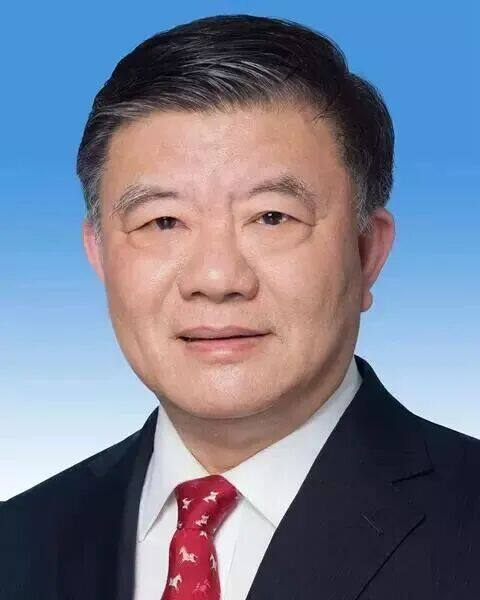
Chen Zhu is a leading physician-scientist and one of China’s most internationally recognized biomedical researchers.
He is the Chief Technical Advisor of the National Science and Technology Major Project on the Prevention and Control of the Four Major Chronic Diseases. He is a Lifetime Professor at Ruijin Hospital, Shanghai Jiao Tong University School of Medicine, Honorary Director of the Shanghai Institute of Hematology, and Chair of the Academic Committee of the State Key Laboratory of Omics and Diseases. He is a member of the Chinese Academy of Sciences and the World Academy of Sciences (TWAS), as well as a foreign or honorary member of numerous global academies, including the U.S. National Academy of Sciences, U.S. National Academy of Medicine, American Academy of Arts and Sciences, the Royal Society (UK), French Academy of Sciences, National Academy of Medicine (France),European Academy of Arts, Sciences and Humanities (EAASH), Academia Europaea, the Academy of Medical Sciences (UK),theHong Kong Academy of Medicine, and the Max Planck Society.
About the Shaw Prize
Established in 2002, the Shaw Prize, often referred to asthe “Nobel Prize of the East,” recognizes individuals who have made outstanding contributions to humanity in Astronomy, Life Science and Medicine, and Mathematical Sciences, with Computer Science to be added in 2027. Each award carries a prize of US$1.2 million. Since its inaugural ceremony in 2004,more than ten Shaw laureates have later received the Nobel Prize, and several recipients of the Shaw Prize in Mathematical Sciences have subsequently been awarded the Abel Prize, underscoring the award’s international prestige. Among the laureates in Mathematical Sciences are three renowned Chinese mathematicians: Shiing-Shen Chern, Wu Wen-Tsun, and Shing-Tung Yau. Wu Wen-Tsun was the first Shaw Prize recipient to hold Chinese nationality, and Professor Chen Zhu is now the second.