




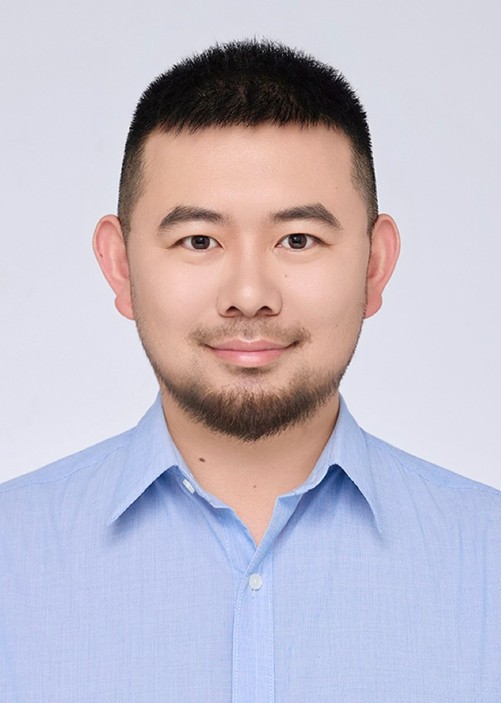
Name: ZHANG Wenxiang
Email: wenxiang.zhang@sjtu.edu.cn
Tel: +86 021-63846590-776627
Research Field: transcriptional regulation mechanisms of adaptive immunity
Laboratory oftranscriptional regulation mechanisms of adaptive immunity
Education:
2012 Ocean University of China B.S.
2018 Chinese Academy of Sciences Ph.D.
Career:
2018.2-2018.12 WuXi Apptec Co., Ltd, Senior Scientist
2019.1-2019.8 Yunion Healthcare Ventures, Investment Manager
2019.9-2023.7 Harvard Medical School / Boston Children's Hospital / HHMI, Postdoctoral Research Fellow (Sun Hur Lab)
2023.7-2024.4 Harvard Medical School / Boston Children's Hospital / HHMI, Instructor
2024.4-present Shanghai Institute of Immunology / Shanghai Jiaotong University School of Medicine, Principal Investigator
Research Interests:
2018.2-2018.12 WuXi Apptec Co., Ltd, Senior Scientist
Transcriptional regulation mechanisms of genes represent fundamental inquiries in life sciences, encompassing intricate molecular dynamics and cellular network regulations. Dr. Wenxiang Zhang obtained his Ph.D. degree in January 2018 from the Shanghai Institute of Biochemistry and Cell Biology, Chinese Academy of Sciences. After a brief industry stint post-PhD, he joined the Harvard Medical School/HHMI Sun Hur
Laboratory as a postdoctoral researcher/Instructor in September 2019, and returned to China in April 2024 to establish the "Acquired Immune Transcriptional Regulation" research group. He has received systematic and in-depth training across various disciplines including biochemistry, cell biology, immunology, drug discovery, genetics, structural biology, and bioinformatics. His research findings have been published in esteemed journals such as Nature, Immunity (cover article), Nat. Commun, and J Biol Chem, and featured in authoritative media outlets like Nature, Immunity, Elite News, and Chemical Word. Dr. Zhang serves as a peer reviewer for journals like Nature Immunology and Frontiers in Immunology, and has been honored with the Jeffery Modell Award.
Focused on acquired immune transcriptional regulation, Dr. Zhang's research group has made significant discoveries, including the identification of repetitive microsatellite sequences in the genome interacting with transcription factors, forming promoter-enhancer loops, and proposing a novel gene transcriptional regulation model (Nature, 2023). Moreover, their investigations into the diverse regulatory mechanisms of the FOXP3 transcription factor in Treg cell function have rectified misconceptions from the past decade (Immunity, 2022). The research group will delve deeper into the transcriptional regulation mechanisms of adaptive immunity genes from molecular and biochemical perspectives, aiming to provide therapeutic strategies for cancer treatment and autoimmune diseases.
Scientific Research Projects:
Excellent Youth Science Fund of National Natural Science Foundation of China (Overseas), 2025-2027
General Program of National Natural Science Foundation of China, 2026-2029
Shanghai Magnolia Youth Program, 2024-2026
Seed Program for Medical New Technology Research and Transformation, Shanghai Health Commission, 2025-2027
Class A, Shanghai Pujiang Talent Program, 2024-2026
Start-up Fund for Introduced Talents, Shanghai Jiao Tong University School of Medicine, 2024-2030
Start-up Fund for Introduced Talents, Shanghai Institute of Immunology, 2024-2030
Jeffery Modell Scientific Research Fund, 2023-2024
Publications:
1. Wenxiang Zhang*, Fangwei Leng*, Xi Wang, Ricardo N. Ramirez, Jinseok Park, Christophe Benoist and Sun Hur. FOXP3 recognizes microsatellites and bridges DNA through multimerization[J]. Nature, 2023: 1-9. Doi: https://www.nature.com/articles/s41586-023-06793-z Highlighted in News & Views in the same issue of Nature. Featured in Elite News, the Innovation, Chemical Word and Evolution News & Science Today.
Fangwei Leng*, Wenxiang Zhang*, Ricardo N. Ramirez, Juliette Leon, Yi Zhong, Lifei Hou, Koichi Yuki, Joris van der Veeken, Alexander Y Rudensky, Christophe Benoist, Sun Hur. The transcription factor FoxP3 can fold into two dimerization states with divergent implications for regulatory T cell function and immune homeostasis [J]. Immunity, 2022, 55(8): 1354-1369. (*, equal contribution). Doi: https://doi.org/10.1016/j.immuni.2022.07.002 Highlighted in Preview in the same issue of Immunity and selected as Cover Article.
Fangwei Leng, Raquel Merino-Urteaga, Xi Wang, Wenxiang Zhang, Taekjip Ha, Sun Hur. Ultrastable and versatile multimeric ensembles of FoxP3 on microsatellites. Molecular Cell, 2025, 85(8): 1509-1524. e7.
Fangwei Leng, Ryan Clark, Wenxiang Zhang, Thibault Viennet, Cuidie Wang, Haribabu Arthanari, Xi Wang, Sun Hur. FoxP3 forms a head-to-head dimer in vivo and stabilizes its multimerization on adjacent microsatellites. Cell Reports, 2025, 44(12).
Juliette Leon, Kaitavjeet Chowdhary, Wenxiang Zhang, Ricardo N. Ramirez, Isabelle André, Sun Hur, Diane Mathis, and Christophe Benoist. Mutations from patients with IPEX ported to mice reveal different patterns of FoxP3 and Treg dysfunction[J]. Cell Reports, 2023, 42(8).
Wenxiang Zhang, Jinjin Xu, Jinhui Li, Tong Guo, et al, Lei Zhang. The TEA domain family transcription factor TEAD4 represses murine adipogenesis by recruiting cofactors VGLL4 and CtBP2 into a transcriptional complex. Journal of Biological Chemistry, 2018: jbc. RA118. 003608.
Chao Wang*, Wenxiang Zhang*, Meng-Xin Yin, Lianxin Hu, et al, Lei Zhang. Suppressor of Deltex mediates Pez degradation and modulates Drosophila midgut homeostasis. Nature Communications 2015, 6:6607. (*, equal contribution)
Lingli He, Liang Yuan, Yang Sun, Pingyang Wang, Xue Feng, Zuoyun Wang, Wenxiang Zhang, et al, Lei Zhang. Glucocorticoid receptor signaling activates TEAD4 to promote breast cancer progression[J]. Cancer research, 2019, 79(17): 4399-4411.
Xue Feng, Zuoyun Wang, Fei Wang, Tiantian Lu, Jinjin Xu, Jinhui Li, Lingli He, Wenxiang Zhang, et al, Lei Zhang. Dual function of VGLL 4 in muscle regeneration[J]. The EMBO journal, 2019, 38(17): e101051.
Lingli He, Liang Yuan, Wentao Yu, Yang Sun, Dan Jiang, Xiaodong Wang, Xue Feng, Zuoyun Wang, Jinjin Xu, Ruizeng Yang, Wenxiang Zhang, et al, Lei Zhang. A regulation loop between YAP and NR4A1 balances cell proliferation and apoptosis[J]. Cell Reports, 2020, 33(3): 108284.
Lingli He, Wentao Yu, Wenxiang Zhang, Lei Zhang. An optimized two-step chromatin immunoprecipitation protocol to quantify the associations of two separate proteins and their common target DNA[J]. STAR protocols, 2021, 2(2): 100504.
Lingli He, Wentao Yu, Yi Lu, Wenxiang Zhang, Jinjin Xu, Lei Zhang. A protocol for in vivo analysis of liver tumorigenesis in mice using sleeping beauty transposon system[J]. STAR protocols, 2021, 2(2): 100445.
Chao Wang, Wenxiang Zhang, Meng-Xin Yin, Lei Zhang. The Study on the Regulatory Mechanisms of Drosophila Midgut Homeostasis by Hippo Signaling. Chinese Journal of Cell Biology 2015, 37(5): 599–603. Google Scholar link:https://scholar.google.com/citations?hl=en&user=xlF3ggwAAAAJ&view_op=list_works&sortby=pubdate