



Investigator
Email:zuyingchai@sjtu.edu.cn
Laboratory for Visual Transduction
Dr. Zuying Chai, Principal Investigator, Doctoral Supervisor. Dr. Chai earned his Bachelor's degree from South China University of Technology and his Ph.D. from the Institute of Molecular Medicine at Peking University, where he was mentored by Dr. Zhuan Zhou. His doctoral research focused on the molecular mechanisms of synaptic transmission. He then conducted postdoctoral research at the Johns Hopkins University School of Medicine, investigating visual transduction and related eye diseases under the guidance of Dr. King-Wai Yau, a distinguished member of the American Academy of Arts and Sciences, the National Academy of Sciences, and the National Academy of Medicine. In July 2025, he joined the SANS Institute at Shanghai Jiao Tong University School of Medicine. His research findings have been published in prestigious journals such as Nature Neuroscience, Neuron, PNAS, Nature Communications, Science Advances, and EMBO Reports.
A series of studies from Dr. Chai's doctoral period (Neuron 2017; PNAS 2019, 2022; EMBO Reports 2022) elucidated the molecular mechanisms of a novel "calcium-independent secretion mode" during synaptic transmission in the nervous system. He extended its physiological significance from the peripheral primary sensory nervous system to the sympathetic and central nervous systems. This work challenged the nearly six-decade-long dogma that synaptic transmission is strictly Ca²⁺-dependent, providing significant complementary and corrective insights to the core theory of neural secretion, the "Katz calcium hypothesis." Subsequently, Dr. Chai's postdoctoral research primarily centered on visual transduction and related eye diseases. His series of studies (Science Advances 2020; PNAS 2020, 2024a, 2024b, 2025; Nature Neuroscience 2024) revealed a previously unknown form of spontaneous activity from visual pigments, overturning the traditional understanding of spontaneous activities in photoreceptors and indicating the existence of a hitherto unknown structural state of visual pigments. More importantly, this novel spontaneous activity of the visual pigments was identified as the major cause of a human congenital form of night blindness.
1. The molecular mechanism of retinal visual transduction and the related eye diseases;
2. The crosstalk between neurons and blood vessels in the mammalian retina.

Email: 184933@shsmu.edu.cn
Focus: Neural biology

Email: ruiliu@shsmu.edu.cn
Focus: Neural biology
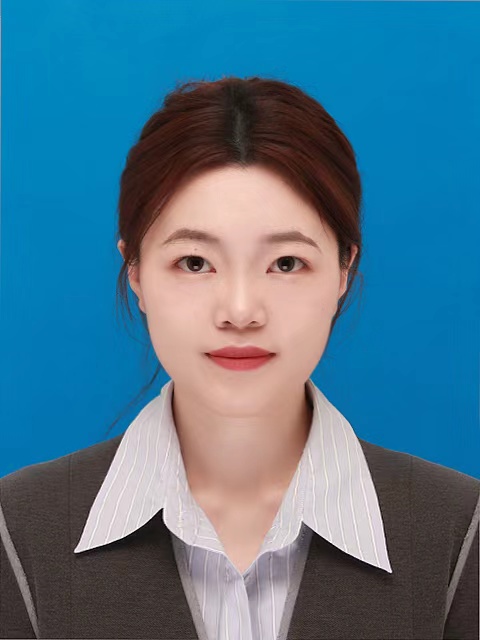
Email: 15601599155@163.com
Focus: Molecular mechanisms underlying the differential photosensitivity of rods and cones
Address: 9F, Research Building A, Shanghai Jiao Tong University School of Medicine, No. 1 Banxia Road, Pudong District, Shanghai, China
Telephone:021-63846590-777439
Email:sinvr@shsmu.edu.cn
Postal Code:201318

WeChat Official Account
Copyright © 2025 Shanghai Jiaotong University School of Medicine