

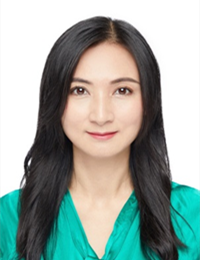
WANG Qiong
E-mail: wangqiong@shsmu.edu.cn
Tel: 63846590-776767
Research Field
The indefinite self-renewal and potential to differentiate into other types of cells represent stem cells as frontiers of regenerative medicine. Embryonic stem cells have the ability to differentiate into almost any kind of cell in the body; adult stem cells can form various cell types of source organs. Elucidating the regulatory signaling pathways of pluripotency and differentiation is a prerequisite for understanding the physiological functions and pathological mechanisms of stem cells. By using human and mouse stem cells, organoids as well as animal models, this lab applies genomics, epigenetics and bioinformatics to understand the regulatory mechanism of stem cell differentiation under physiological and pathological conditions, which will help speed the clinical application of stem cell therapy. The primary research interests focus on:
Study the early fate-determination mechanism of embryonic stem cell towards mesendoderm;
Identify key developmental regulators of mesendodermal organs and study the clinical applications of adult stem cells or progenitors.
Personal Introduction
Education & Work Experience
2018- Principal Investigator,Professor
Shanghai Jiao Tong University, School of Medicine, Shanghai, China
2012-2018 Research Associate with Dr. Joan Massague
Memorial Sloan-Kettering Cancer Center, NY, USA
2010-2012 Research Fellow with Dr. Dirk Bohmann
University of Rochester, NY, USA
2005-2010 Ph.D. in Biomedical Genetics
University of Rochester, Rochester, NY, USA
2002-2005 Master of Medicine in Biochemistry and Molecular Biology
Shanghai Jiao Tong University School of Medicine, Shanghai, China
1997-2002 Bachelor of Medicine with highest honor in Clinical Medicine
University of South China, Hunan, China
Academic Awards
2025 Shanghai Oriental Talent Program, Top-notch Project, P. R. China
2024 First Prize in the Basic Medicine Category at the 16th National Science and Technology Academic Conference on Medicine and Health, P. R. China
2019 Professor of Special Appointment (Eastern Scholar) at Shanghai Institutions of Higher Learning
2017-2018 MSKCC Helena Johnson Hackley Society Scholar Prize, New York, NY, USA
2016 Geoffrey Beene Cancer Research Center Viewer Choice Award, New York, NY, USA
2014-2016 NYSTEM Postdoctoral Training Award, New York, NY, USA
2009 21st Genetics Day Poster Award, University of Rochester, Rochester, NY, USA
2008 20th Genetics Day Poster Award, University of Rochester, Rochester, NY, USA
Scientific Research Projects
Ministry of Science and Technology Key R&D Project on "Stem Cell Research and Organ Repair," 2021YFA1100400, Functional and Mechanistic Study of the Cell Cycle and DNA Methylation in the Establishment, Maintenance, and Exit of Pluripotency, 2021-12 to 2026-06, 2080,000 RMB.
National Natural Science Foundation of China General Program, 3257050112, The epigenetic regulator TASOR controls stem cell differentiation by influencing chromatin architecture, 2026-01 to 2029-12, 500,000
Shanghai Committee of Science and Technology, China;,20ZR1430400,2020/07-2023/06,200,000 RMB
Shanghai Science and Technology Commission, 25ZR1401216, TASOR regulates stem cell differentiation toward mesendoderm by modulating three-dimensional chromatin architecture, 2025-07 to 2028-06, 200,000 RMB
National Natural Science Foundation of China General Program, 32070865, Early Fate Determination Mechanism of Embryonic Stem Cell Differentiation into Mesendoderm, 2021-01 to 2024-12, 580,000 RMB.
Shanghai Science and Technology Commission, 20ZR1430400, Organoid Construction and Differentiation Mechanism of Human Pancreatic Progenitor Cells, 2020-07 to 2023-06, 200,000 RMB.
Shanghai Distinguished Professor (Oriental Scholar), 2019-11 to 2022-10, 100,0000 RMB.
National Natural Science Foundation of China General Program, 31771512, Regulatory Mechanism of the TGFβ-SMAD Signaling Pathway on Stem Cell Differentiation, 2018-01 to 2021-12, 630,000 RMB.
Publications
Zhao B., Yu X., Shi J., Ma S., Li S., Shi H., Xia S., Ye Y., Zhang Y., Du Y. & Wang Q. A stepwise mode of TGFβ-Smad signaling and DNA methylation regulates naive-to-primed pluripotency and differentiation. Nature Communications 2024. 15, 10123.
Huang H., Jiang Y., Liu J., Luo D., Yuan J., Mu R., Yu X., Sun D., Lin J., Chen Q., Li X., Jiang M., Xu J., Chu B., Yin C., Zhang L., Ye Y., Cao B., Wang Q*. & Zhang Y*. Jag1/2 maintain esophageal homeostasis and suppress foregut tumorigenesis by restricting the basal progenitor cell pool. Nature Communications 2024. 15, 4124. (*Co-correspondence)
Wang Q., Zou Y., Nowotschin S., Kim S., Li Q. V., Soh C.-L., Su J., Zhang C., Shu W., Xi Q., Huangfu D., Hadjantonakis A.-K., and Massagué, J. The p53 Family Coordinates Wnt and Nodal Inputs in Mesendodermal Differentiation of Embryonic Stem Cells. Cell Stem Cell. 2017; 20: 70-86 (with Preview)
Aragón E.#, Wang Q.#, Zou Y.#, Morgani S., Ruiz L., Kaczmarska Z., Su J., Torner C., Tian L., Hu J., Shu W., Agrawal S., Gomes T., Márquez J., Hadjantonakis A., Macias M., and Massagué J. Structural basis for distinct roles of SMAD2 and SMAD3 in FOXH1 pioneer-directed TGF-β signaling. Genes & Development. 2019; 33, 1506-1524 (# co-first author)
Wang Q., Uhlirova M., and Bohmann D. Spatial restriction of FGF signaling by a matrix metalloprotease controls branching morphogenesis. Developmental Cell. 2010; 18: 157–164 (Cover article)
Ma Shuangyu, Zhao Bingnan, Wang Q., The development and application of pancreatic organoid technology. Chinese Journal of Cell Biology. 2021, 43(6): 1166-1173 (Invited Review)
Su J., Morgani S.M., David C.J., Wang Q., Er E.E., Huang Y.H., Basnet H., Zou Y., Shu W., Soni R.K., Hendrickson R.C., Hadjantonakis A.K. & Massague J. TGF-beta orchestrates fibrogenic and developmental EMTs via the ras effector RREB1. Nature. 2020; 577, 566-571
Li Q., Dixon G., Verma N., Rosen B., Gordillo M., Luo R., Xu C., Wang Q., Soh C., Xiang Q., Leonardo T., Evan T., Massague J., Garippa R., Huangfu D. Genome-scale screens identify JNK-JUN signaling as a barrier for pluripotency exit and endoderm differentiation. Nature Genetics. 2019; 51, 999–1010
Martin-Malpartida P., Batet M., Kaczmarska Z., Freier R., Gomes T., Aragón Eric, Zou Y., Wang Q., Xi Q., Ruiz L., Vea A., Márquez J., Massagué J. & Macias M. Structural Basis for Genome Wide Recognition of 5-bp GC Motifs by SMAD Transcription Factors. Nature Communications. 2017; 8(1): 2070-84
Wang X., Wang P., Pan Y., Wang Q.*, Yin M*. Effect and mechanism of phenotypic transformation of vascular smooth muscle cells regulated by TGF-β2 on the venous thrombus wall remodeling. Medical Journal of Chinese People’s Liberation Army. 2020; 45, 791-797 (* co-correspondence)
Gao F.H., Wang Q., Wu Y.L., Li X., Zhao K.W., Chen G.Q. c-Jun N-terminal kinase mediates AML1-ETO protein-induced connexin-43 expression. Biochemical and Biophysical Research Communications. 2007; 356: 505–511
Li X., Xu Y.B., Wang Q., Lu Y., Zheng Y., Wang Y.C., Lubbert M., Zhao K.W., Chen G.Q. Leukemogenic AML1-ETO fusion protein upregulates expression of connexin 43: The role in AML1-ETO-induced growth arrest in leukemic cells. Journal of Cellular Physiology. 2006; 208(3): 594 – 01
Song M.G., Gao S.M., Du K.M., Xu M., Yu Y., Zhou Y.H., Wang Q., Chen Z., Zhu Y.S. and Chen G.Q. Nanomolar Level of NSC606985, a camptothecin analogue, induces leukemic cell apoptosis by protein kinase C-dependent mechanisms. BLOOD. 2005; 105(9): 3714-21
Chen G.Q., Wang Q., Yan H. and Chen Z. Arsenic trioxide and leukemia: from bedside to bench. (Chapter 11, p251-272) Natural Products: Drug Discovery and Therapeutic Medicine. 2005; Eds Humana Press Inc. 999, Totowa, NJ 0751
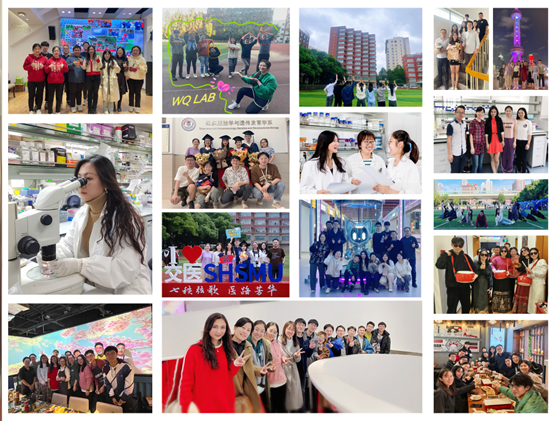
Lab Members:
| Name | Title | |
| Zixiang Gao |
Assistant | Researcher |
| Yiwen Li |
Assistant | Researcher |
| Shoubing Xia |
Postdoctoral | fellow |
| Kaihua Xi |
Postdoctoral | fellow |
| Mengmeng Liu |
Graduate |
student |
| Jilong Yang |
Graduate | student |
| Ruiqing He |
Graduate | student |
| Heng Du |
Graduate | student |
| Tong Zhu |
Graduate | student |
| Shiyu Zhang |
Graduate | student |