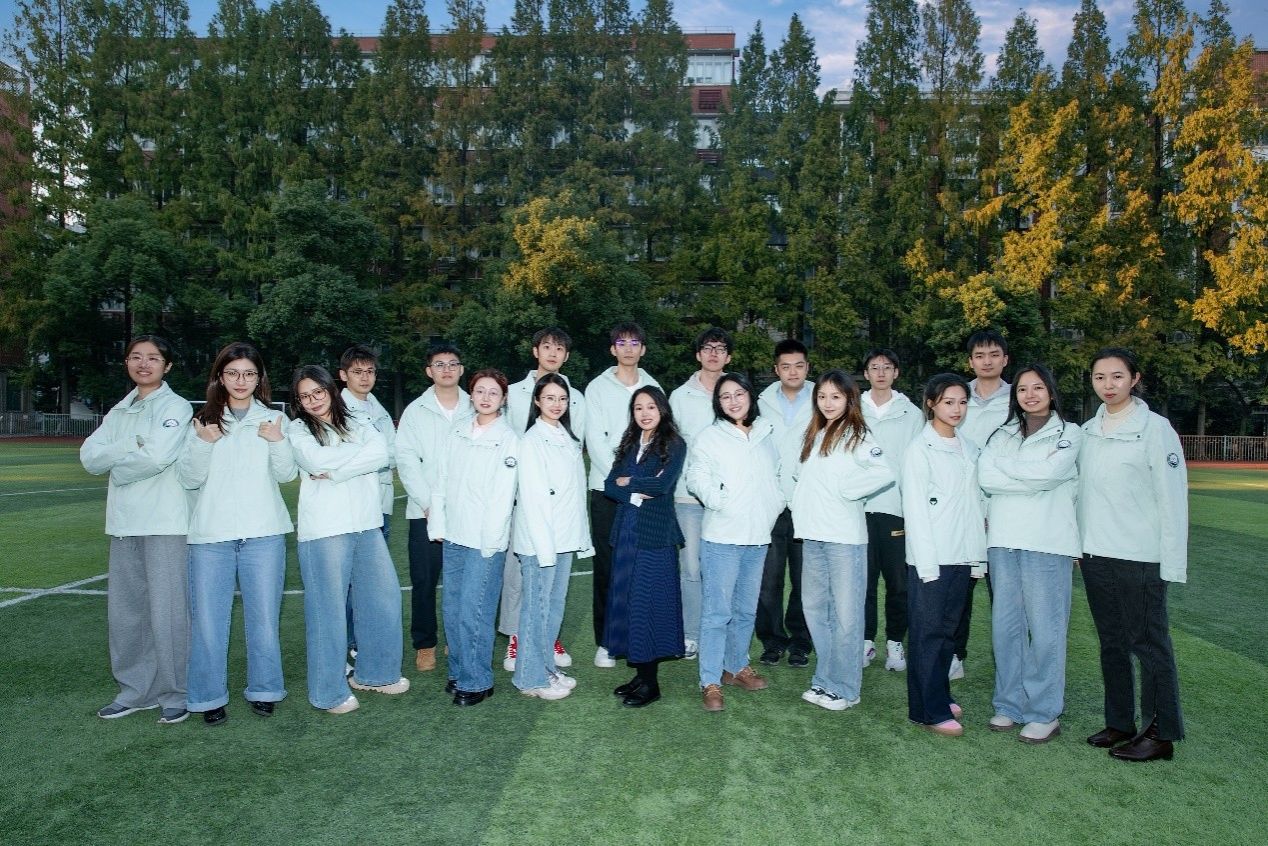


Lab Leader:Youqiong Ye
Lab Name:Laboratory of Tumor Multiomics and Immunotherapy
Lab Info:
Our group focuses on the spatial characteristics of the tumor boundary microenvironment and their regulatory mechanisms. We conduct systematic investigations along a progressive framework of spatial feature characterization-immune evasion mechanisms-identification of potential therapeutic targets. We have developed a series ofnovel spatial omics algorithms and databases to characterize the spatial architecture of the tumor microenvironment; elucidated the molecular mechanisms by which the tumor boundary microenvironment regulates immune evasion; and identified potential targets while constructing predictive models and analytical tools for immunotherapy response. Our overall goal is to systematically define the critical roles of the tumor boundary microenvironment in tumor initiation, progression, and therapeutic response. To achieve this, we pursue the following three research directions:
(i) Development of single-cell and spatial omics algorithms and databases for characterizing tumor microenvironment
Advances in single-cell and spatial multi-omics technologies have greatly enhanced our understanding of cellular heterogeneity in complex biological systems. To fully leverage these technologies, our group has developed a series of computational methods and databases to systematically dissect the spatial features of the tumor microenvironment. For example, Cottrazm enables precise identification of tumor boundaries, multi-scale inference of spatial cellular composition, and reconstruction of near single-cell resolution spatial gene expression maps (Nat Commun2023a). HiST integrates spatial transcriptomics with histopathological images through a multi-scale deep learning framework, enabling prediction of spatial expression profiles and supporting tumor localization, prognosis evaluation, and clinical subtyping from H&E images (Adv Sci2026).
In terms of resource development, we have established a multi-layered database system, including the pan-cancer tumor spatial microenvironment database SpatialTME (Can Res2024a), the pan-cancer stromal cell atlas scPanStroma (Can Res2024b), and the dynamic tumor immune microenvironment database CTTIME capturing pre- and post-treatment changes (GPB2025). We further developed SpatialToolDB, an integrated visualization platform that combines spatial transcriptomics technologies, analytical algorithms, and databases (Sci Bull2026). These resources substantially improve the accessibility and analytical power of single-cell spatial omics data and provide a foundation for computational modeling of cellular phenotypes under physiological and pathological conditions. Our group continues to advance methodological development, with particular emphasis on cross-modal integration and cross-sample modeling.
(ii) Mechanistic studies of tumor boundary microenvironment in immune evasion
We focus on the tumor boundary as a critical spatial niche regulating immune responses, aiming to systematically elucidate its role in T cell dysfunction and immune evasion. Based on single-cell and spatial multi-omics approaches, we have shown that hypoxic heterogeneity in the tumor microenvironment shapes spatial cellular organization and drives immunotherapy resistance through a “hypoxia-ALCAMhighmacrophage-exhausted T cell” axis (Nat Metab2019;Adv Sci2024). Further studies revealed that in the tumor–adjacent interface, interactions betweenSPP1⁺ macrophages andFAP⁺ cancer-associated fibroblasts (CAFs) promote extracellular matrix deposition, forming a physical and functional immune barrier that restricts T cell infiltration. Targeting SPP1 disrupts this interaction, enhances T cell infiltration, and improves immunotherapy efficacy (Nat Commun2022;J Hepatol2023). In addition, we demonstrated that CAFs in the interface region induce functional exhaustion of CD8⁺ T cells at the tumor boundary, contributing to immunotherapy resistance (Cancer Res2024b;Adv Sci2025). Moreover, collaborative studies revealed that metabolic reprogramming plays a crucial role in regulating T cell function (Cell Metab2023;Immunity2024a, 2024b). Collectively, our work systematically elucidates how the tumor boundary microenvironment regulates T cell migration and dysfunction through spatial organization, cellular interactions, and metabolic regulation, providing a theoretical foundation for understanding immune evasion and improving immunotherapy strategies.
(iii) Construction of predictive models based on clinical cohorts and identification of spatially associated therapeutic targets
Accurate prediction of immunotherapy response remains a major challenge, as traditional biomarkers such as tumor mutational burden and PD-L1 expression are insufficient for comprehensive patient stratification. Based on clinical treatment cohorts, our group has developed predictive models including an early immune activation model based on dynamic changes of plasma cytokines(Innovation2022), as well as models based on alternative polyadenylation and circRNA features (Can Res2022;Nat Commun2023b). Furthermore, by integrating multi-cancer spatial multi-modal data with immunotherapy outcomes, we are developing agent-guided spatial predictive models to improve the accuracy and generalizability of response prediction.
In terms of target discovery, we focus on spatially defined functional niches within the tumor boundary microenvironment. We found that during chemotherapy, tumor cells can transition from intermediate states to a drug-resistant basal-like phenotype, co-evolving with SPP1⁺ macrophages and exhausted CD8⁺ T cells to form an immunosuppressive resistant niche. Mechanistically, the immune checkpoint molecule CD276 plays a dual regulatory role by promoting basal-like transformation of tumor cells while enhancing immunosuppressive signaling (Gastroenterology2026). This research direction aims to identify key spatially associated regulatory molecules and facilitate their translation into potential therapeutic targets, ultimately improving treatment efficacy and patient outcomes.
Lab Members: