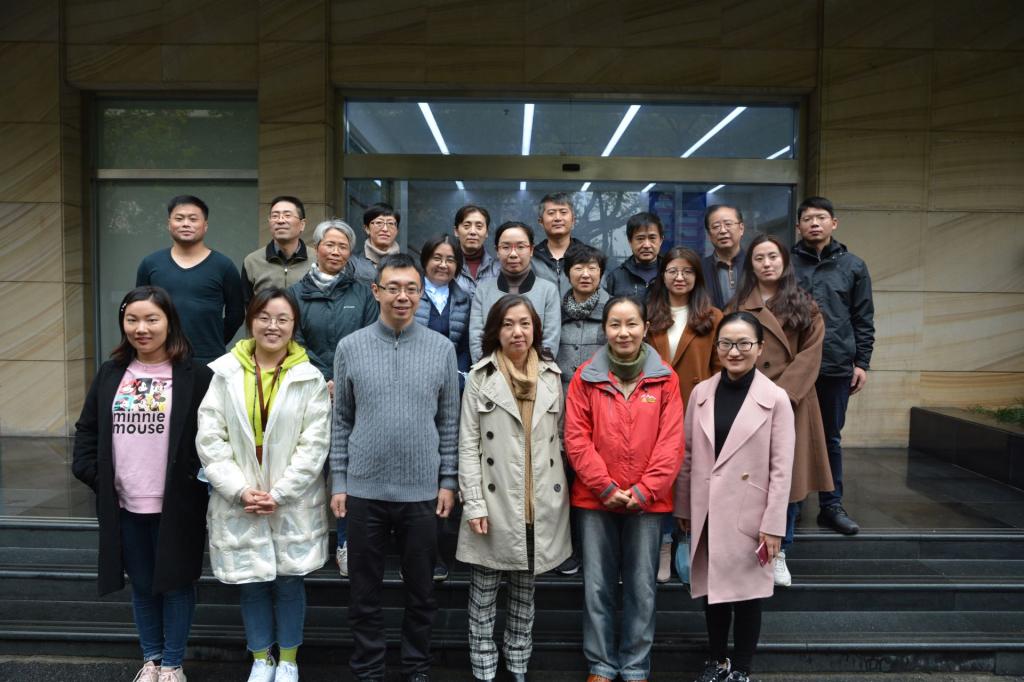


Laboratory of AI-Driven Glycan Regulation and Drug Discovery

Lab Leader: Xi Cheng
Lab Name: Laboratory of AI-Driven Glycan Regulation and Drug Discovery
Lab Info:Our lab focuses on integrating artificial intelligence (AI) with molecular simulation methodologies to decode glycan-mediated regulatory mechanisms and pioneer AI-driven drug development platforms.
The research interests include:
1. Algorithm development for molecular interactions. To develop AI and molecular simulation algorithms aimed at modeling multi-scale intermolecular interactions.
2. AI-driven glycan structure-function analysis. To unveil the structure-function relationships of glycans and elucidate their regulatory roles in pathological processes using machine learning methods.
3. Intelligent drug discovery targeting glycanregulation. To establish AI-powered drug screening systems to accelerate therapeutic development for cancer and immune disorders via glycan modulation.
Laboratory of Protein Dynamic Structure and Function Prediction and Molecular Discovery
Lab Leader:Shaoyong Lu
Lab Name:Laboratory of Protein Dynamic Structure and Function Prediction and Molecular Discovery
Lab Info:Our labis dedicated to the prediction of protein dynamic structures and functions, as well as the molecular discovery process. Specially, we focus on identifying small molecule binding sites forundruggable proteins and discovering associated molecules.
The research interests include:
1.Prediction of proteindynamic structure and function. This involves employing enhanced sampling techniques and AI-based methodologies tocomprehensively characterize theconformational ensembles of proteins.
2.Molecular discovery. This focuses on identifying small molecules targeting undruggable proteins by leveraging their dynamic conformational ensembles.
Lab Members:
| Name | Title | |
| Dr. Jianxiang Huang | Research Fellow | jxhuang@sjtu.edu.cn |
Laboratory of AI Protein Design
Lab Leader: Haicang Zhang
Lab Name: Laboratory of AI Protein Design
Lab Info:Our lab aims to develop advanced AI algorithms for protein design, drug design and protein complex structure prediction. Our long-term goalisto build the unified generative model for both structure prediction and de novo design across multiple biological molecules, including proteins, nucleic acids (DNA/RNA), and small molecules.
The research interests include:
1. Cutting-Edge AI Methodology
Develop next-generation generative models, reinforcement-learning frameworks, and deep geometric learning methods tailored to life science research.
2. AI-Driven Protein Design
Build generative models for de novo design of therapeutic proteins—antibodies/nanobodies, peptides, and mini-proteins.
3. AI-Driven Protein Structure Prediction
Predict conformational ensembles and interaction interfaces by integrating AI models with physics-based models, thereby accelerating molecular docking and virtual screening.
Lab Members:
| Name | Title | Research Topic |
| Yuliang Fan | Research Fellow | AI protein design |
| Zaikai He | Research Fellow | AI protein design |
Laboratory of Molecular Pharmacology and Drug Design
Lab Leader: Youwen Zhuang
Lab Name: Laboratory of Molecular Pharmacology and Drug Design
Lab Info:Our laboratory investigates the molecular pharmacology of neurotransmitter receptors and advances structure-based or AI-based drug design, with a primary emphasis on neurotransmitter GPCRs. We focus particularly on receptors fundamental to the onset and progression of neuropsychiatric disorders, including dopamine, opioid, and serotonin receptor systems, etc.
The research interests encompass:
1. Elucidating the molecular basis of precision pharmacology and signal transduction mechanisms of neurotransmitter receptors. The membrane receptors of neurotransmitters such as GPCRs respond to diverse ligands exhibiting distinct pharmacological profiles, such as antagonist, partial agonist, and allosteric modulator activities. We aim to uncover the precise molecular mechanisms underlying these varied pharmacological responses, thereby informing the design of drugs with desired pharmacological activities;
2. Structure-based screening and development of novel therapeutics for neurological disorders;
3. The neuropharmacological mechanisms of neuropsychiatric drugs;
4. Identification and discovery of innovative drug targets for the treatment of neuropsychiatric conditions.
Lab Members:
| Name | Title | |
| Kewei Chang | Assistant Research Professor | changkewei@sjtu.edu.cn |
| Mingyang Li | Experimentalist/Lab Manager | mingyangli@sjtu.edu.cn |
| Jianhui Zhou | Postdoctoral Fellow | jhzhou2024@sjtu.edu.cn |
| He Yang | PhD Candidates | yang.he@sjtu.edu.cn |
| Yini Liu | Exchange Student | liuyini106ngu@163.com |
| Yunyun Zhang | Exchange Student | yyzz2210@163.com |
| Miaojie Xu | Exchange Student | m202400630931@163.com |
| Zhikang Xu | Visiting Scholar | zhikangxu@sina.com |
| Ruxi Lei | PhD Candidates | leirx3@sjtu.edu.cn |
| Juan Wang | Master’s Student | wangjuan286@sjtu.edu.cn |
| Qinfang Li | Visiting Student | u202213256@hust.edu.cn |
| Junjie Zhu | Visiting Scholar | zhujunjie15@mails.ucas.ac.cn |
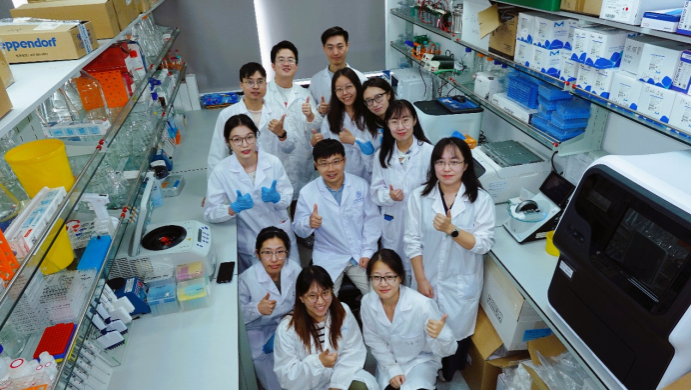
Center of Medicinal Chemistry and Bioinformatics
Lab Leader: Jian Zhang
Lab Name: Center of Medicinal Chemistry and Bioinformatics
Lab Info:The Medicinal Chemistry and Bioinformatics Center is the main base for innovative drug research, teaching and foreign cooperation in our institute, with 19 employees, the director is Professor Zhang Jian, and the Party Secretary is Associate Professor Yao Liyun. The center focuses on the application of medicinal chemistry, bioinformatics, chemical biology and clinical drugs in diagnosis and treatment, and has an important influence in the world. In terms of scientific research, achievements in the direction of accurate target identification and First-in-class original drug pilot discovery have been published in international journals such as Nature and Nat Chem Biol. In the past five years, he has presided over more than 30 projects including the National Natural Science Foundation of China Outstanding Youth Science Fund and National Major Scientific and Technological Special Project for “Significant New Drugs Development”. In terms of teaching, the center undertakes about 1800 class hours of teaching work every year, and the teaching team has edited and participated in the editing of 24 textbooks, presided over more than 10 teaching projects, and published about 15 teaching papers. As the interdisciplinary innovation base of Shanghai Jiao Tong University, the center undertakes the training of undergraduate scientific research innovation, and has won 5 national awards (2 of the highest awards for basic medical innovation research of college students in China) and 4 Shanghai municipal awards.