




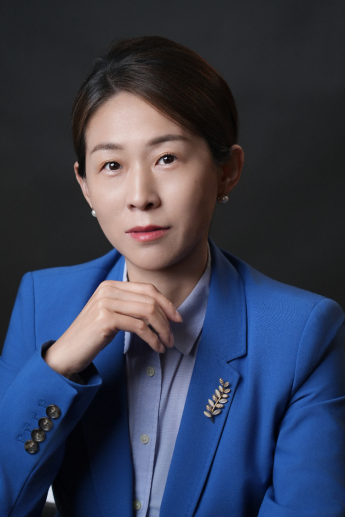
Limei Jing
Professor
School of Public Health, Shanghai Jiao Tong University
E-mail: limei_jing@sjtu.edu.cn; limei_jing@163.com
Professor Limei Jing is a distinguished scholar in public health and health management, with a Postdoctoral fellowship from Harvard University and visiting experience at the University of Alberta.
Main research interests focus on health management and evidence-based decision-making, elderly care and health data, cancer and chronic disease management, hospice & palliative care, medical security and payment incentives, etc.
She holds key positions in professional associations, including Deputy Chairman of the Hospice and Palliative Care Special Committee of the Chinese Medical Ethics Association, Standing Committee Member of the Humanistic Care Committee of the China Life Care Association, Executive Director and Deputy Chairman of the Hospice and Palliative Care Committee of the Shanghai Community Health Association, and Standing Committee Member of the Health Economics Theory and Policy Committee of the Chinese Health Economics Association, etc.
With extensive experience in leading international, national, and provincial-level research projects, she has made remarkable achievements in policy transformation of research outcomes, and has been honored with multiple academic awards and professional recognitions.
Major funded research projects
1. Constructing and Empirically Testing a Comprehensive Evaluation Model for Hospice and Palliative Care Services in the Context of Population Aging (09/2024 – 08/2027). National Social Science Fund of China (NSSF).
2. Study on Quality Evaluation of Hospice Care Services in Primary Health Centers and its Influencing Factors in China (01/2021 – 12/2024). Co-PI, China Medical Board (CMB-OC).
3. Research on Design and Systematic Evaluation of Capitation Payment Model for Urban and Rural Basic Medical Insurance Based on the Concept of Health Integration (01/2016 – 03/2019). National Natural Science Foundation of China (NSFC).
4. Research on Advantageous Diseases of Traditional Chinese Medicine and Payment Methods (05/2023 – 02/2024). National Healthcare Security Administration, National Institute of Medical Security.
5. Measuring the Palliative Care Behaviors of Healthcare Professionals and Assessing Training Needs in the Context of the Healthy China Initiative (01/2020 – 12/2022). Ministry of Education Humanities and Social Sciences Planning Fund.
6. Monitoring the Progress of Elderly Care and Hospice/Palliative Care Work (06/2023 – 12/2026). National Health Commission of the People's Republic of China, Continuous Funding.
7. Study on Disability and Care Status of Urban and Rural Elderly in China (07/2024 – 03/2026). National Health Commission Statistics Information Center.
8. Research on Medical Insurance-related Policies and the Development of Traditional Chinese Medicine Industry (01/2022 – 10/2022). First Batch of Qiushi Projects, China Association of Chinese Medicine.
9. Research on Pricing Strategies and Payment Reform for Hospice and Palliative Care Services Based on the Concept of Health Integration (04/2022 – 03/2025). Natural Science Foundation of Shanghai.
10. Theoretical and Empirical Study on the Comprehensive Monitoring and Evaluation of Hospice and Palliative Care Service Development in Shanghai (03/2023 – 02/2024). Shanghai Municipal Science and Technology Commission Soft Science Research Program.
11. Systematic Evaluation and Improvement Strategies for Hospice and Palliative Care Services in Shanghai under the Context of Population Aging (01/2020 – 12/2022). Shanghai Planning Office of Philosophy and Social Science.
12. Demand Calculation and Resource Matching of Long-term Care Services for the Elderly under the Background of Healthy Aging (01/2024 – 10/2025). Key Laboratory of Long-term Care for the Elderly of the Ministry of Education.
Publications
1. Opioid consumption, availability, and policy alignment in primary hospice and palliative care in China: a multicomponent comparative analysis. Support Care Cancer, 2026.
2. How does the general public perceive hospice and palliative care? -An empirical study from China. BMC Palliative Care, 2025.
3. Disparities in Hospice and Palliative Care Services: Evidence of Healthcare Provider Practice in Various Regions of China. BMC Public Health, 2025.
4. The relationship between burnout, quality of life, and associated factors among public health professionals in Shanghai: a cross-sectional study. BMC Public Health, 2025.
5. Emerging Health Needs in the Post-COVID-19 Era: A Population Health Framework. Ecohealth. 2025.
6. The ongoing impact of policy documents on the pandemic based on the framework of the "4Rs" theory and policy tools: in China. BMC Public Health, 2025.
7. Palliative Care in Shanghai Communities: Needs, Influencing Factors and Preferences Among Older Adults with Chronic Diseases. Healthcare (Basel). 2025 .
8. Navigating preferences for a trouble-free transition: a grounded theory study among older residents in nursing homes. BMC Public Health, 2025.
9. The comparison of spatial patterns and factors associated with healthcare provider knowledge in palliative care in various regions of China. Humanities and Social Sciences Communications, 2024.
10. Nurses’ practices and their influencing factors in palliative care. Frontiers in Public Health, 2023.
11. Attitudes and influencing factors of nursing assistants towards hospice and palliative care nursing in chinese nursing homes: a cross-sectional study. BMC Palliative Care, 2023.
12. Predicting the behavioral intentions of hospice and palliative care providers from real-world data using supervised learning: A cross-sectional survey study. Frontiers in Public Health, 2022.
13. Healthcare Provider Knowledge, Attitudes, and Practices in Hospice Care and their Influencing Factors: A Cross-sectional Study in Shanghai. International Journal of Health Policy and Management, 2022.
14. Instrument development of health providers' Knowledge, Attitude and Practice of Hospice Care Scale in China. International Journal of Health Planning and Management, 2021.