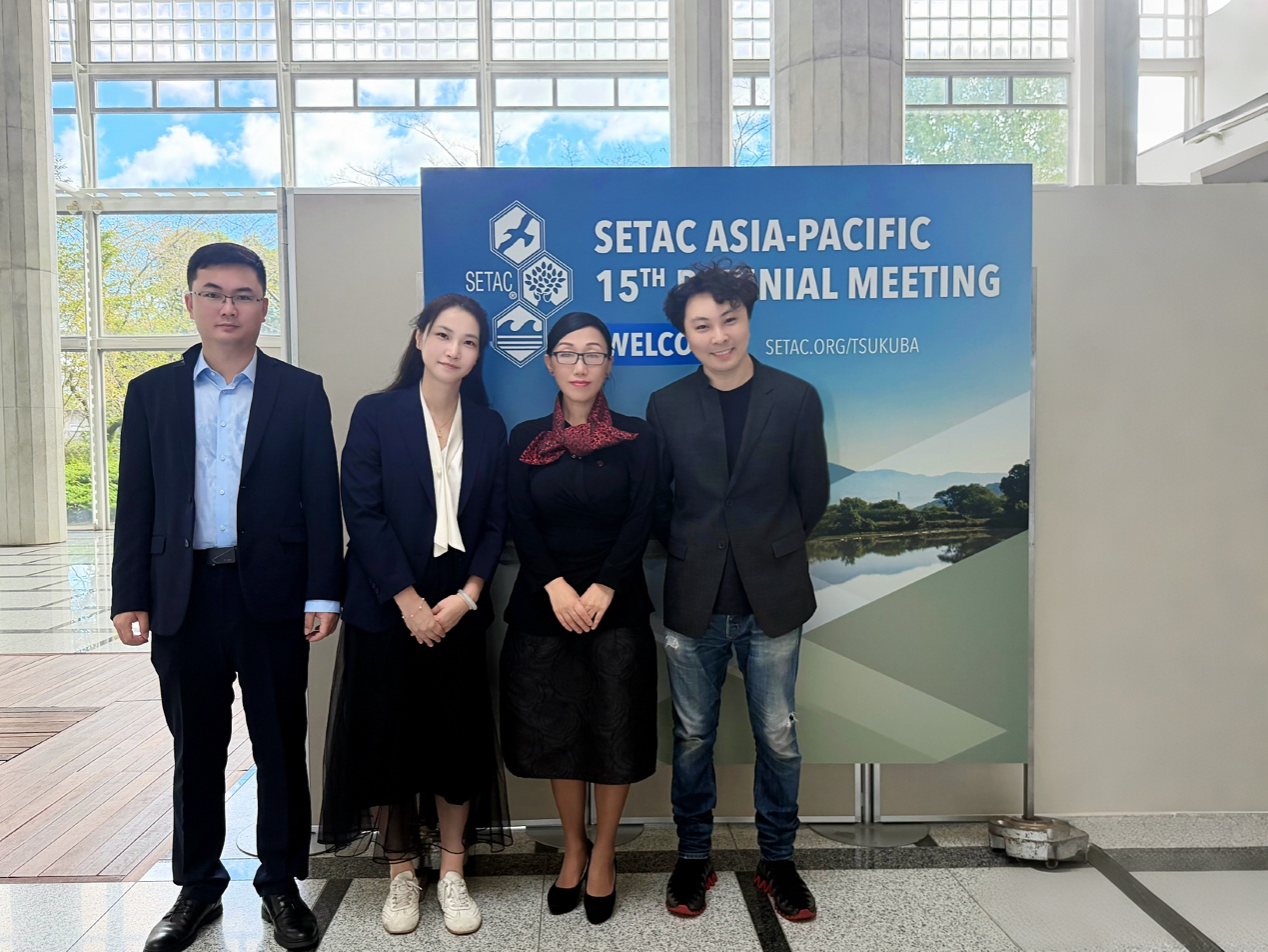


Recently, Professor Wang Hui, Dean of the School of Public Health, Shanghai Jiao Tong University and President of the Shanghai Society of Toxicology, led a delegation to Japan for academic visits, and attended the 15th Biennial Meeting of the Society of Environmental Toxicology and Chemistry Asia‑Pacific (SETAC Asia‑Pacific) held in Tsukuba, Japan. The delegation conducted in‑depth exchanges with experts and scholars in toxicology across the Asia‑Pacific region, further expanding the international academic cooperation network, advancing collaborative innovation in toxicology, and bringing a broader perspective into the development of Shanghai as an international science and technology innovation center.
Focusing on key topics including food safety, toxicity testing, health risk assessment and advances in cutting‑edge toxicological technologies, Professor Wang Hui engaged in extensive dialogues with experts and scholars from Asia and the Pacific Rim. She presented the research progress of the School of Public Health, Shanghai Jiao Tong University and the Shanghai Society of Toxicology in toxicology, public health and health risk assessment, and held thorough discussions on new technologies, novel methodologies and interdisciplinary collaborative innovation. These efforts strengthened ties between toxicology‑focused academic organizations and research institutions in Shanghai and the Asia‑Pacific, laying a solid foundation for broader international research cooperation, sharing of academic resources and cultivation of young talents.
During the conference, the Shanghai Society of Toxicology and SETAC Asia‑Pacific held a signing ceremony for a cooperation agreement, which was jointly signed by President Wang Hui and SETAC Asia‑Pacific Chair Hiroshi Yamamoto. Under the agreement, the two sides will cooperate in priority areas such as frontier toxicological research, New Approach Methodologies (NAMs), toxicity testing and risk assessment, international academic exchange, professional technical training and training of young scientific and technological talents. Both parties will explore regularized and institutionalized international cooperation frameworks to facilitate research resource sharing, technological and methodological innovation, and personnel exchange. This agreement marks a major step for the Shanghai Society of Toxicology in deepening international academic cooperation and expanding its Asia‑Pacific science and innovation network.
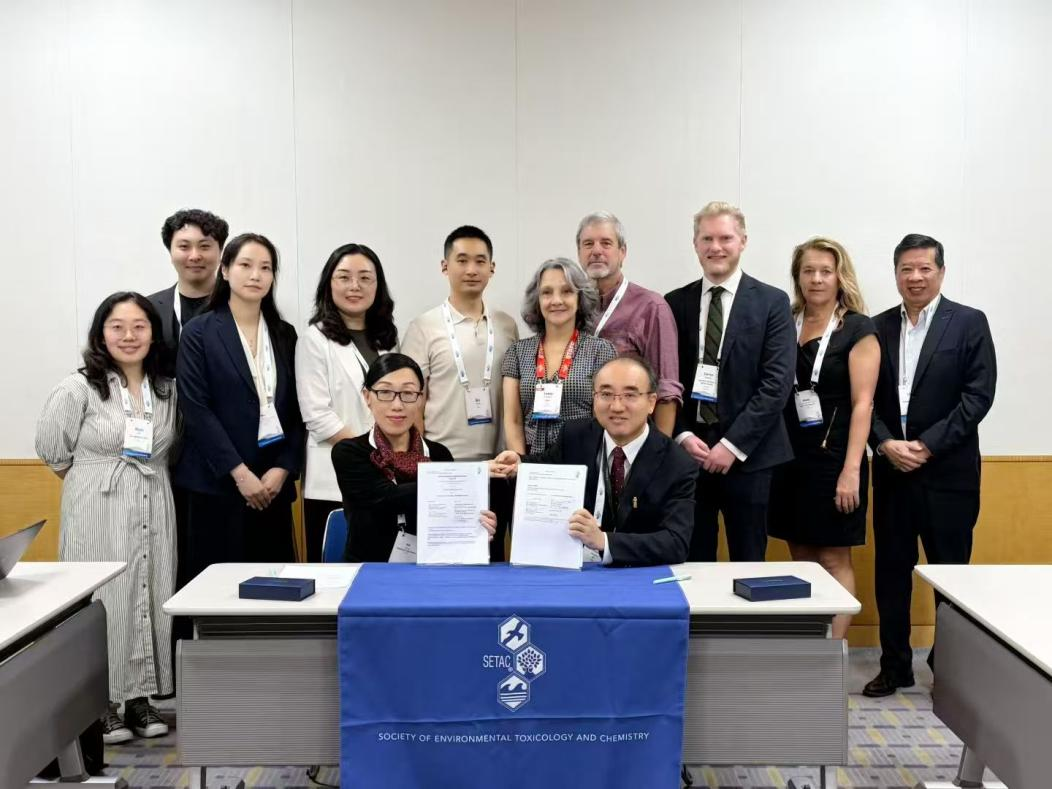
This visit and the signing of agreement have fostered closer cooperative links between the School of Public Health, Shanghai Jiao Tong University School of Medicine and relevant Asia‑Pacific academic organizations and research institutes. Driven by rapid advances in life sciences, artificial intelligence and emerging toxicological technologies, toxicology is undergoing accelerated transformation toward mechanistic interpretation, intelligent prediction and precise risk assessment. In response to this trend, leveraging its disciplinary and research strengths, the School will keep promoting interdisciplinary integration between toxicology and artificial intelligence, public health, environmental health, biomedicine and other disciplines. It will actively carry out joint academic events, research collaboration, technical training and young‑talent exchange programs to boost research resource sharing and technological innovation. The School strives to enhance scientific and technological innovation capacity in toxicology and contribute to building Shanghai into an international science and technology innovation center and implementing the Healthy China Initiative.