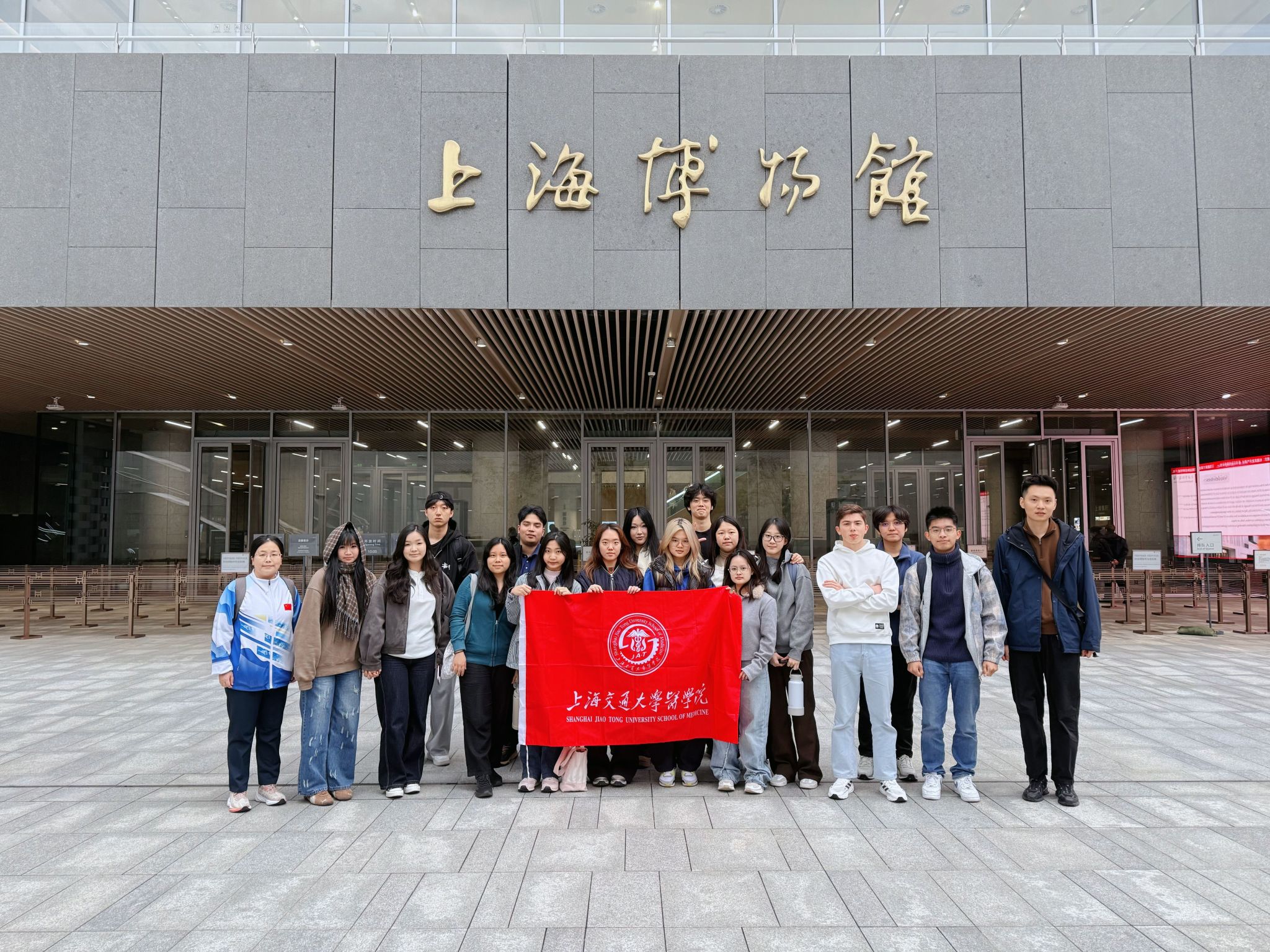
On November 9, under the guidance of their course instructor Li Zhangxiao, international students from the 2026 five-year Clinical Medicine and Stomatology programs at our School of Medicine visited the Shanghai Museum East for a course practice activity as part of the “China Panorama” course.
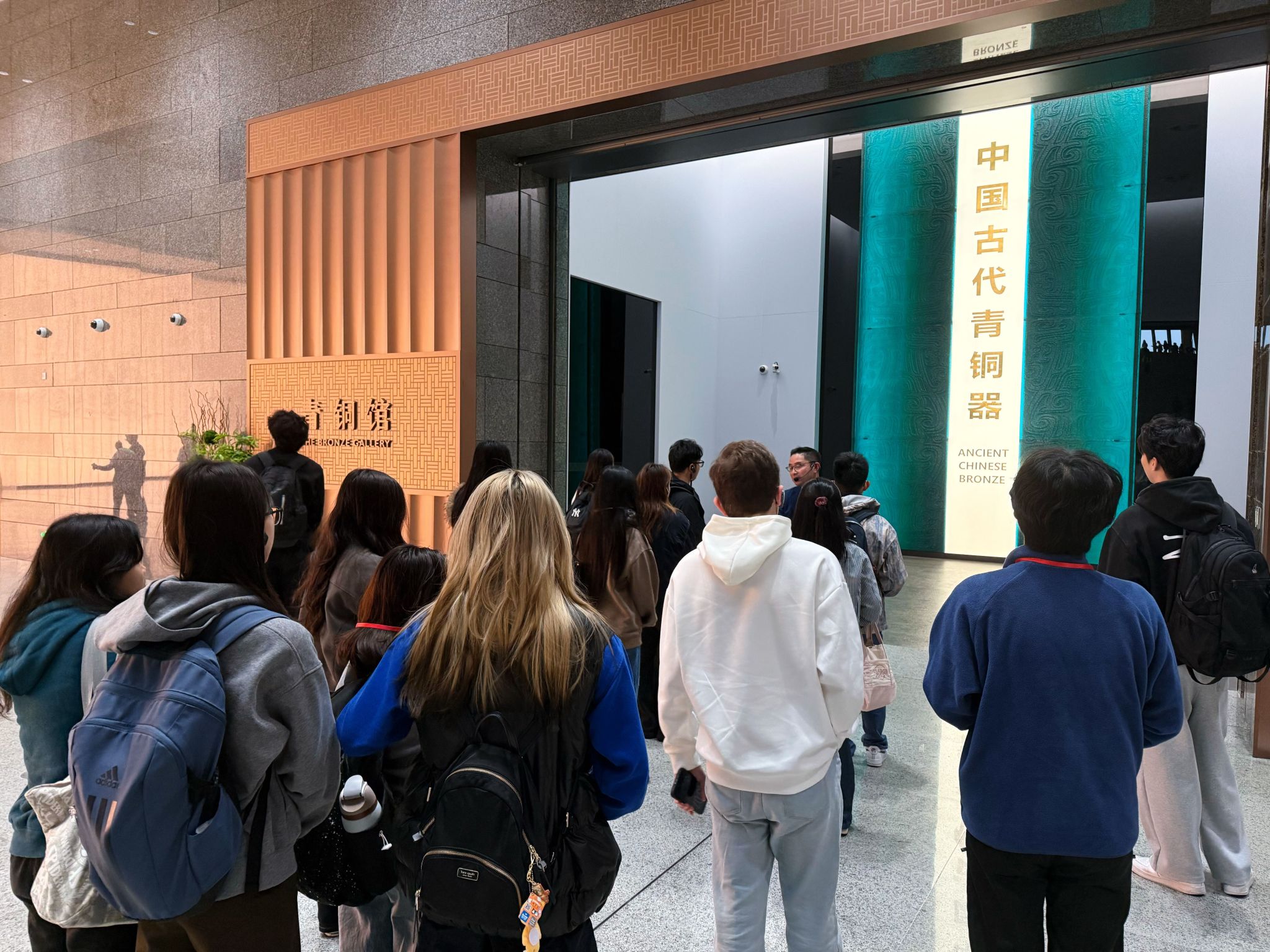
At the museum, the students first visited the Bronze Gallery led by a docent. The docent began with the casting techniques of bronzes and introduced the functions and evolution of ritual vessels, musical instruments, and weapons during the Shang and Zhou dynasties. Students paused before each heavily cast and intricately decorated bronze, listening attentively to the history behind each artifact and engaging in discussions with the docent on topics such as the meaning of inscriptions and their contexts of use, showing great interest in the bronze civilization of over three thousand years ago.
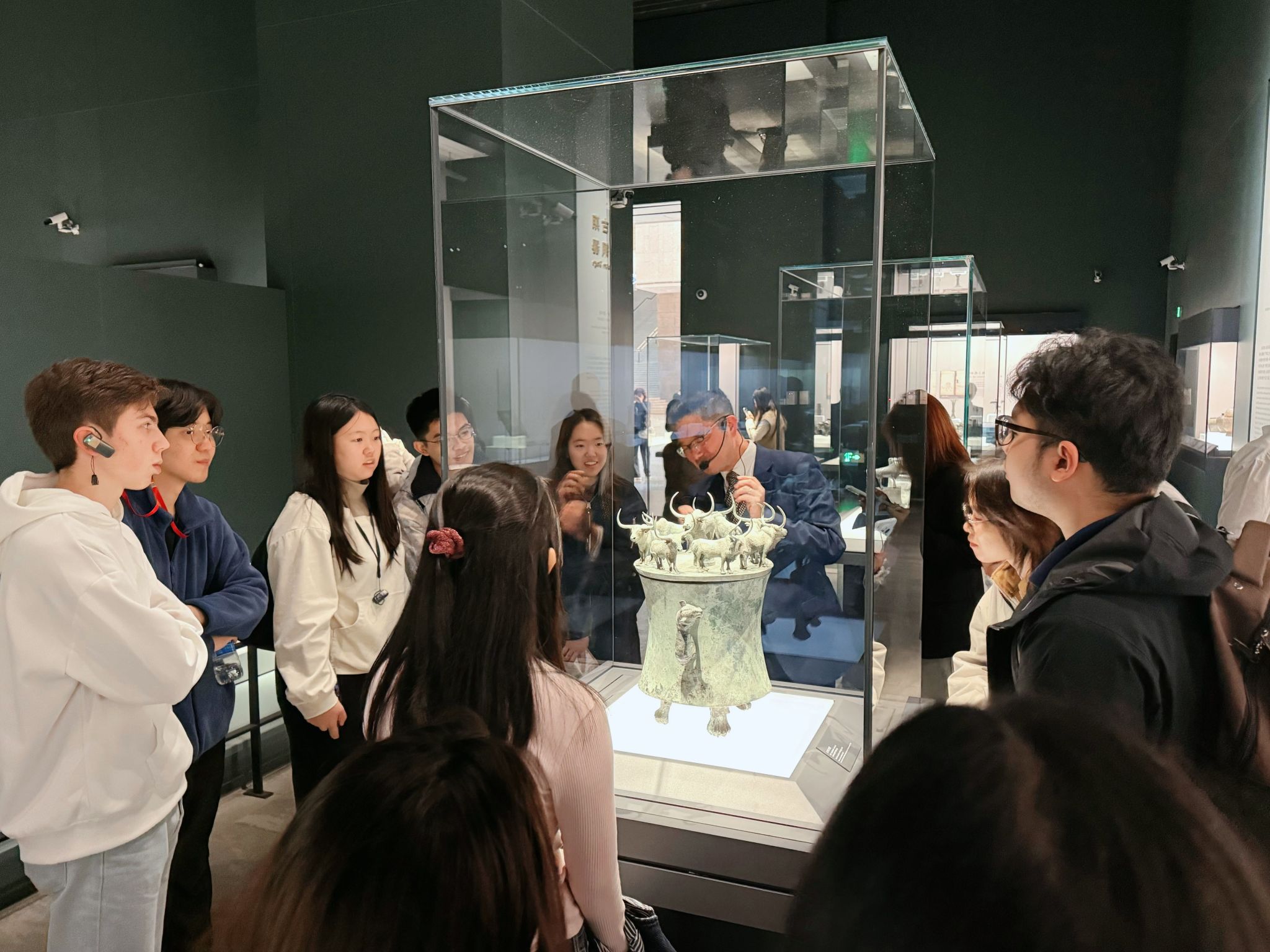
In front of the Western Han Eight-Oxen Cowrie Container, the students were deeply captivated by this uniquely shaped artifact. The docent explained that the lid was cast with eight sturdy bulls and that the vessel once held cowrie shells, symbolizing ritual and wealth in the ancient Dian Kingdom. Students enthusiastically asked questions about the vessel’s function and the symbolic meaning of the bulls, marveling at the ancient craftsmen’s realistic skills and distinctive aesthetic.
After the Bronze Gallery, the students freely explored other galleries featuring ceramics, painting, and calligraphy, expressing that the practice activity gave them a more intuitive sense of the diversity and depth of Chinese culture, and that they benefited greatly.
Yuting Song: The gallery displayed bronzes such as ding, gui, gong, and jue. The most impressive to me was the Da Ke Ding, whose interior is densely covered with inscriptions recording the land system of the Western Zhou. During the visit, the docent told a cold joke: why does the Quanjude Roast Duck restaurant hang a replica of the Da Ke Ding? Because Quanjude sells duck, and the ding is called Da Ke Ding — “Da Ke” sounds like “duck”, which made all the students laugh. This visit not only broadened my knowledge but also gave me a sense of the weight of Shang and Zhou bronze civilization and the wisdom of the ancients.
Elhan Charyyev: The new building is very beautiful and spacious inside. I saw many ancient bronzes and porcelains, each exquisitely crafted. What impressed me most was the interactive exhibition area, where you can learn the stories behind the artifacts using your phone — it was really interesting. This visit not only increased my knowledge but also made me love Chinese culture even more. I recommend everyone go and see it.
This visit was one of the teaching practice activities for the “China Panorama” course for international students. By integrating classroom teaching with extracurricular practice, it aimed to give students an up-close understanding of the profound heritage and diverse dimensions of Chinese history and culture, serving as a vivid example of national conditions education for international students. Through this visit, students not only deepened their understanding of what they had learned in class but also enhanced their intuitive perception of and identification with Chinese culture through direct observation of artifacts.